Showing posts with label textbook. Show all posts

Monday, May 6, 2013

5 Tips for Writing Great Textbook Captions

Open any book and go to an illustration or photograph.

Go ahead, I'll wait.

I'll bet you read the caption before you really looked at the graphic. Am I right?

Of course I am. Duh.

Captions  — or legends, as we call them in textbook publishing — are small but extremely important bits of information. They're not terribly difficult to write if you keep just a few tips in mind.

#1  Decide on the style.

Decide on the legend style you and your publisher prefer. For textbooks, we tend to use a quite brief style, with just a few words explaining the image. However, some books require more comprehensive legends.

Here are two images, one with a brief legend and one with a more comprehensive one.
Normal chest X ray
This X ray shows the heart and lungs in a patient
without lung or cardiac conditions.
If you use a brief style, make sure to avoid articles, such as the, a, and an, and conjunctions, such as and, but, or, or nor.

#2  Maintain a consistent style.

Whichever style is used, make sure every legend is consistent in format and tone. Try not to flippity-floppity from one style to another.

The exception is for multi-part images, such as the one below. Most legends in this particular book are brief, but a number of them add comprehensive descriptions of selected parts of the image.


#3  Explain all callouts and labels.

From Practical Radiology: A Symptom-Based Approach
Make sure your legend explains all callouts and labels. A callout is a brief bit of text connected by a line (usually an arrow) pointing to a piece of an illustration, a photograph, or another kind of graphic.

In the image at right, the callouts are "Fractured rib" and "Hemothorax".

The text "Right lung" is a label. Labels are used to identify large sections of a graphic or to distinguish one part from another part.

If your image has callouts, make sure to explain them in the caption. (I would have been happier if the image at the right had mentioned the fractured rib, which the running text did but not the legend. Oh, well.)

#4  Make references to items in image clear and uniform.

When you have more than one item you're highlighting in an image, make sure the references to those items in the legend follow a clear, logical progression. Here's an example:


Notice how the legend takes on an A-B-C sequence. Do the same thing for callouts in, say, an illustration of the femur. If the callouts start at the top and work their way down, do the same with any reference to the callouts.

#5  Double-check all legends on page proofs.

Always — ALWAYS — double-check legends when you have final art. You would be amazed at the number of ways such a little item can get all bunged up.

Legends may be little, but they're key elements of a solid textbook.

Wednesday, August 8, 2012

Niche Publishing in Health Care Education


Lenny Kravitz
Lenny Kravitz might not need to fit into any particular niche, but health care textbooks certainly do.

Publishers identify each book's particular niche, or market segment, during the earliest stages of development, typically during concept development. We need to figure out who will buy the book before we can actually write the book.

We work to identify markets that offer the greatest opportunity for sales. We love when a book can appeal to a large market. Wheeee!

Some books, though, are made to appeal to a small market. Those might be a tougher sell to a publisher.

Consider two examples:

  1. Textbook A is designed for physician assistants (PAs) in the U.S., a market of roughly 84,000. Capturing even 10 percent of that market could prove profitable for a publisher.
  2. Textbook B is designed for PAs working in pediatric ophthalmology offices, of which there might be, I don't know, a few hundred? That would be a considerably tougher sell for most publishers.

That doesn't mean that Textbook B would never be published, but it does mean that the author will have to be more diligent in finding just the right publisher.

Wednesday, August 1, 2012

Authors Are Humans Too

Authors aren't robots, they're human. Oh, well.
We textbook publisher-types tend to be a patient lot. We work with authors who, as it turns out, are human.

Humans get sick. They get pregnant. They have babies.

They care for aging or ill parents.

They lose their jobs or have to take on more and more responsibilities in less and less time.

They're busy, and busy people don't always do as much as they want to do, don't complete everything they want to complete.

Go figure.

So we wait. We nudge. We cajole, tease, and yes, sometimes threaten. (Though, truth be told, that almost never works.)

We do our best to protect the publishing company's interests, but in the end, we're dealing with humans.

A colleague at a project update meeting once jokingly said, when discussing some of the travails yet another author was experiencing, that he (let's make the person male this time around, shall we?) had had it with authors. From now on, he would have a new rule: "No heart attacks. No pregnancies. No babies. Welcome to F.A. Davis!"

We all roared because we knew exactly what he was talking about.

Life happens. And when it happens to authors, we publisher-types wait it out and hope for the best.

Because we're human too.

Dang it.

Monday, April 23, 2012

Should I Write My Health Care Textbook Before Sending It to a Publisher?

NO!!!

Do NOT write the whole book before you talk to a publisher!

NOOOOOOOOOOOOO!!!!

(Loud panting.)

Sorry, I got a little carried away, there.

Every now and then an aspiring author tells me that the book they're working on is nearly finished, and would I consider publishing it. I try to control my emotions and explain slowly and clearly why that's not a good idea.

No publisher, no guidance

Authors generally write their entire first novel before finding a publisher, and that's fine. It works in trade publishing. But in educational publishing, it won't fly.

Successfully authoring a textbook or clinical reference without a publisher is rather like trying to drive cross-country alone, without a map, and expecting never to get lost. It could happen, but the odds are amassed against it.

In textbook publishing the publisher is the author's best friend. The publisher and her team (or, in my case, his team) help the author by:
  • fine-tuning the author's vision for the book
  • delineating the specific market
  • analyzing and enhancing the features of the book, including such tasks as:
    • identifying and formatting themed sidebars
    • reviewing the table of contents with an eye to the book's marketability, not just its clinical and pedagogical organization
    • providing expert feedback about specific chapter content, paying particular attention to pedagogy, clarity, organization, tone, and consistency in presentation
  • serving as champion for the author's clinical and creative vision when dealing with the publishing company's decision-making body
  • providing essential feedback early in the process to avoid problems later

Let experience be your guide

Experienced authors know well the benefits that a trusted publisher can bring to a project. I don't think any of my experienced authors would ever attempt to author a new textbook without getting a publisher first.

They've learned firsthand the value of having fresh insight into their vision. They know just how incredibly important a developmental editor's work is. They understand unequivocally how  important it is to marry the vision for the book with the markets best suited for it.

So take a lesson, you first-timers. Talk to a publisher before writing your entire manuscript. You'll be glad you did.

[Large, contented sigh of relief.]

Thursday, January 12, 2012

5 Tips for a Great Manuscript Review

By Guest Blogger Donna Morrissey

A key ingredient for publishing a successful textbook is the review process. Before a book is published, while the manuscript is still in draft form, publishers will seek out the opinions of other experts in the field to read the manuscript and identify weak areas and incorrect content as well as the strengths that make the book worth buying.

This feedback is critical for helping authors fine tune their work and for ensuring the book's success. As any writer can attest, one can lose sight of the forest while in the midst of the trees.

As an author gets deeper and deeper into the writing of individual chapters, it can be difficult to maintain continuity between chapters and keep track of all the details. For reviewers, particularly instructors who are involved in making decisions about what textbooks to use for their courses, it's a good way to keep an eye on the latest trends.

So what makes for a good review?

#1 — A good review focuses on the content as a whole. When teaching a course, does this content explain the material clearly? Will students understand what they're reading? Will they gain the knowledge needed from reading these chapters? Will instructors need to develop a host of supplemental materials to fill in the blanks that the book does not address?

#2 — A good review compares the manuscript to the textbooks they're already using. Does the new book do a better job of explaining the important concepts? Does it cover more topics than their current textbook or is it ignoring important topics that one would expect to see? Does it provide the most current information? Does it identify other resources students can easily access if they want more information?

#3 — A good review examines the learning outcomes or objectives given at the beginning of the chapter. Are they clear? Are they attainable? Are they practical? Will a student be able to accomplish these objectives after reading the chapter?

#4 — A good review also examines the review questions given at the end of the chapter. Do they prompt the student to think about what they read or can they copy and paste the answers from the text? Are the questions relevant to what's covered in the chapter? Do they assume more than what a student of this course would be expected to know?

#5 — Ask: Are key terms clearly identified and defined? Do the terms help broaden a student's vocabulary and knowledge? Do the terms help students deepen their understanding of the subject?

These are all elements authors and publishers need to know are being done well. A textbook that does not explain the subject, fails to inspire students to think critically about the subject, or does not provide students with tools to help them transition from understanding the concept to putting it into practical application is not a good textbook. Reviewers who provide this type of feedback are a valuable resource for publishers, authors, and for the market in general.

What does NOT make for a good review?

What does NOT make for a good review are reviewers whose comments focus on the mechanics of writing or the more technical issues. Many reviewers return chapters of manuscript with pages filled with notes about misplaced commas or typos. Publishers typically hire people to fix those mistakes. They're called copyeditors.

Reviewing drafts of chapters is understandably difficult. It can be distracting to read through a text that's filled with dangling participles, passive verbs, and split infinitives. For people who love language and writing, it can be hard to resist the urge to delete that unnecessary comma or insert that critical semi-colon or circle that annoying typo. I can respect that.

However, reviewers need to keep in mind they were approached to review a manuscript because they possess a level of expertise about the subject at hand and not because they have mad English skills. As a developmental editor, part of the job is to help guide authors in their writing to ensure they are expressing the content in a clear, concise manner that is useful to students and instructors.

Although a DE may be fairly knowledgeable in many areas, most of them aren't experts in any one particular area. Receiving solid feedback from reviewers can confirm that the authors are on the right track or give them the evidence that tells them a new direction is needed.

Copyeditors, on the other hand, have a completely different set of skills. They are trained to spot the smallest detail and the slightest wonkiness in sentence structure. The range of their knowledge extends from the most glaring of spelling mistakes (loose vs. lose is a favorite) to the finest detail of semantics and word selection (read that last paragraph...should it be 'ensure' or 'insure'? Are you sure?). They can recite their prepositions on command and know the differences between an en dash, an em dash, and a hyphen. They'll go to the mat to defend their placement of commas and apostrophes and woe betide the person who uses "it's" or "its" incorrectly.

Copyeditors may seem a bit obsessive, but that's why we love them. They'll take those draft chapters and vigorously disinfect them from spelling errors, grammatical errors, and ambiguous wording. By the time the manuscript gets to the printer, it will be as smooth as a baby's bottom with not a blemish in sight. Trust in this, reviewers.

So, let go of your inner copyeditor and tell us: After this book is published, will you use it?

Tuesday, November 15, 2011

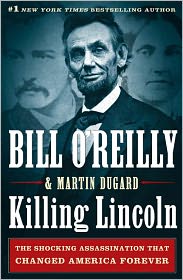
'Killing Lincoln' and How Errors Can Sneak Into a Textbook


That pompous schmuck Bill O'Reilly and his co-author Martin Dugard are currently being raked over the journalistic coals for substantive errors in their bestselling book, Killing Lincoln: The Shocking Assassination that Changed America Forever.
Civil War experts, including a book reviewer from the official magazine of the Civil War Society, have cited at least ten errors in the book. According to an article on Salon.com, assassination author Edward Steers Jr. cites these errors and more from the book:
  • A farm where John Wilkes Booth hid after the killing was not 500 acres, as the book noted, but 217 acres.
  • The book refers to John Ford's chief carpenter as John J. Clifford. In fact, his name was Gifford.
  • Lewis Powell, the man assigned to kill secretary of state William Seward, did not speak with "an Alabama drawl," as the book notes. Powell was from Florida.

These errors to the nonhistorian might seem petty, but suppose there were similar errors in a healthcare textbook? As a healthcare expert, what would you say?

You'd probably say the same thing that Mr. Steers said about O'Reilly's book: "If all of the above sounds like nitpicking, consider this. If the authors made mistakes in names, places, and events, what else did they get wrong? How can the reader rely on anything that appears in Killing Lincoln?"

The answer is complicated.

Every book has errors


Consider this: There are errors in every book published. Every, single one.

Don't take my word for it. Ask yourself, when was the last time you read a book that didn't have at least one misspelling or punctuation error, or an odd line break where there shouldn't be one, or any other error, factual or otherwise?

I'm guessing that you've never seen such a book, and neither have I.

The same is true for textbooks. Every acquisitions editor at every healthcare publisher has published books with errors in them. From the wonderful Rhonda Dearborn at Delmar, to the fabulous Joan Gill at Pearson, to the marvelous Katey Bircher at Jones & Bartlett, we have all published books with errors.

And we all absolutely and unequivocally hate it.

Our authors hate it even more. They work so very hard to create the very best possible book, and then, after the book publishes, they find this error or that and ask, "How did that happen?"

Here's how


That Pompous Schmuck's book aside, errors can creep into a book in nearly innumerable ways, from poor copyediting to a poor author, from reviewing the same content over and over again to not looking at it enough, from technical glitches to printer error.

We publishers put into place as many safeguards as we can to prevent errors from reaching the reader, and they work nearly all the time. But then, sometimes, for inexplicable reasons, one particular book will be beset with problems and will inevitably hit the shelves with more than the usual number of errors.

I suspect that's partly what happened to That Pompous Schmuck's book. I suspect — and that's all it is, a suspicion — that part of the reason there are so many factual errors was that the fact-checking team at the publishing house (Henry Holt, a division of MacMillan) fell a bit short of its goal. It happens.

Mostly, though, I think the errors, at least the ones I've seen, were the result of the author's lack of competent research, and that's a whole 'nuther ball game. The publisher can try as it might, but it can't overcome a bad author.

So in this case, let's blame — say it with me, now — That Pompous Schmuck!

Thursday, September 1, 2011

3 Things You Probably Didn’t Know About the High Cost of Textbooks

Man, are textbook publishers getting a bad rap nowadays, or what?

There's even something now called the Textbook Rebellion Cross-Country Tour, and no, I'm not giving you the link to the tour, you'll have to find it yourself. The "tour" features two so-called mascots: "Mr. $200 Textbook and Textbook Rebel," according to a Flat World Knowledge press release, "in spectacular larger-than-life costumes, who will help local volunteers distribute cost-saving tips and collect petition signatures."

Seriously? I mean, look at this:


A SpongeBob wannabe being chased around campus by a snarky smoker in a bad suit? And the snark is supposed to be a publisher? Grrrr.

Yes, I'm a little peeved at the moment.

The main issue, of course, is the rising cost of college textbooks. I understand that, I really do, and yes, some publishers are jacking up their prices unnecessarily. I wish they wouldn't, but they do.

The rest of us, though, are getting a bum rap, and here are three reasons why.

Reason #1: The "Just Gotta Have It" syndrome

Years ago, before e-mail, the internet, and iMacs, before Amazon, e-books, and even Angry Birds Halloween, there was a time when textbooks came with nothing for faculty but an instructor's guide. In it you got some lecture notes, quizzes, tests, and maybe even a few classroom activities.

Today, if a publisher even thinks about offering just a measly instructor's guide with a textbook, nothing else, we would get run out of Dodge on a hardcover rail. Today faculty just gotta have at least:

  • Full set of lecture notes in PowerPoint format, one or more PowerPoints for each chapter

  • Instructor's guide, yes, but with dozens of classroom activities; various syllabi for an 8-week, 10-week, 12-week, 15-week, 18-week, heck, even a 23.7-week course; even more test items, and don't you dare repeat the test items in the electronic test bank, they all have to be different; images for coloring, step-by-step guidance for teaching every piece of information in every chapter; indexes that coordinate every piece of information with every other piece of information in all the various ancillaries

  • Electronic test bank with a lot of test items, a real lot, hundreds—no, make that thousands of 'em, more than any instructor could ever dream of using, because, after all, it's about the numbers

  • Interactive software—not that students ever actually use the software, it just needs to be available, is all

  • More, more, and more, stuff we don't even know about yet—yes, we want that too.

Some publishers have started to charge for some of those ancillaries, but most of us still give them away as an incentive for faculty to adopt our books. And because we've always given them away (I'm smacking my head with my hand, now, can you see?), faculty expect they'll always be free. And know what? They probably always will be.

Reason #2: Increasing costs


With faculty demanding more and more content, publishers have to find ways to get that content in a cost-efficient manner. Authors at one time had to write all of their own ancillaries—test banks, PowerPoints, and so forth.

More and more, though, publishers are finding that they can't burden their authors that way, that they need more content than can reasonably be expected from the authors (who have already written an entire textbook, by the way) in the time frame they need it in. So we turn to outside vendors.

Fees for writing, say, 750 test items can run in the $15,000–$25,000 range. Do you know how many books we would have to sell to make that money back? A boatload.

A big boatload.

A big, honking, lumbering barge of a boatload.

And software? We're talking $50,000 and up to develop some fairly straightforward activities.

Video? Everybody wants video, how cool. We're at, what, somewhere in the $1,000–$1,500 range for finished video per minute, sometimes even more.

Whether we charge for these items doesn't matter, the costs have to be borne somewhere, and in the end, that somewhere is the student.

Reason #3: It's health care, after all


Don't get me wrong, I get as steamed as the next guy about, say, college history books costing exponentially more each new edition when history hasn't changed all that much since, well, since it was made.

So for publishers who play that game, just slapping a new cover on an old book and then charging $30 more per unit for the "revised" version, I say let 'em have it. SpongeBob yourself senseless.

But in health care the content changes all the time. New procedures, new drugs, new philosophies, even. All of that new stuff needs to find its way into our books.

So when we revise a book, our authors have to make sure all their content is fully up-to-date. That takes time and effort, and I think authors and publishers ought to be compensated accordingly. We do that in part through price increases. Not big ones, but increases nonetheless.

So if you happen to see a publisher-type with a ginormous head and a cigarette hanging out of his sneering mouth, chasing around a lumpy sponge with a bullhorn and an ugly belt, tell them I said to go home. Some of us publishers don't need no stinkin' rebellion.

Wednesday, January 19, 2011

5 Tips for Writing a Great Lead for a Textbook Proposal

The lead for a proposal should whack the editor upside the head with how great the book will be.

That's right, I said, "whack."

Too often I see proposal leads that sit there like a plain burger on a bun, when really, I should be seeing a burger congested with condiments.

Follow these five tips for making your proposal look yummy. (Hmm, I must be hungry.)

1. Make the first sentence shine

That first sentence is important. It tells the editor right away whether you know what you're doing. Be clear. Be focused. Get to the point.

Here are a few examples of solid lead sentences:

  • This book is meant to build on the quality and reputation of the current series of Notes books, as it applies to the medical student and junior resident interested in Dermatology. [Tells me immediately what the book is and where it fits.]

  • On a daily basis, medical office personnel at all levels in the health-care profession may come in contact with some form of medication. [Tells me why the content is important.]

  • The purpose of the proposed book is to serve as a clinical tool for medical assisting students through their clinical courses as well as their externship and employment in the medical setting. [Gives me a sense of the breadth of the market.]
I'd rather see more active verbs used in these example, but each one gets to the point quickly and helps draw me in. Speaking of active verbs…

2. Use active verbs

I can't say this enough. Active verbs pull the reader into the content and keep him going. Use them!

Instead of "This book will be used by medical assistant students to…," write "Medical assistants need this book to…"

Instead of "The goal of this text is to…," write "This book will provide…"

Instead of "The foundations of practice will be covered in the first chapter," write "The first chapter covers the foundations of practice."

See the difference?

3. Indicate the market

Describe in that first paragraph the specific markets the book will aim for. Don't say, "All healthcare professionals—doctors, nurses, even medical assistants!—will want to buy this book."

Not even Stephen King's books sell to everyone. His book sell to people who enjoy reading scary novels. People who enjoy biographies, say, might not find his books particularly compelling.

Your book will be the same way. It won't meet everyone's needs. It can't.

Ask yourself, If I could describe the perfect reader of my book, what would he or she look like? If the person would be a physician assistant, that's your main market.

4. Point out the academic level you're planning to reach

Many textbooks aim to reach entry-level students. The titles of these books typically include such indicator words as basic, fundamental, essentials, or some such. Same with texts geared for more advanced markets.

You may not include one of those indicator words in your proposed book title, but you should point out in the lead which level your book will hit or at what point in the academic cycle it will be used in.

5. Explain how your approach differs from others'

You may be thinking about writing a textbook because you believe that what's out there already doesn't meet your needs. You have something to say, a unique or interesting approach to teaching the content.

Explain that approach in tight, concise terms.

It's harder than it seems. That's why I ask potential authors to provide a vision statement for their book.

I explain vision statements as a modified version of what you would tell someone about your book if you were on an elevator and had only 5 or 6 floors to explain. The best vision statements communicate the author's rationale and philosophy and declare a promise of benefits to the reader.

You may want to craft a vision statement first and then put into the lead the "meat" of that statement.

OMG, I said "meat."'

I must be starving! Time for lunch.

Sunday, February 14, 2010

Role of the Author

A somewhat common situation here last week prompted me to write this entry.

It seems that one of our authors had given us a large amount of content, separated neatly in different Word files, and then considered his job finished. Done. He wrote, he saved, he sent. Finito.

Not so fast, Bucko.

We held in our hands lots of content, absolutely, but it was pretty much raw content. Chapter numbers but no chapter titles. No end-of-chapter exercises even though the book was supposed to have them. No directions of any kind about what kinds of illustrations he wanted.

(By the way, I'm using "he" here but it could just as easily be "she." The point is that this situation is not rare and not confined to any particular gender, market, or type of book.)

Basically the author was saying to us, "Here's your content, make a book."

Nuh-uhn. That's not how it works.

When you author a book, you need to give the publisher all content. Everything. You write the title page, subtitle page, copyright page (though some publishers, like us, usually take that on, though we shouldn't), dedication, acknowledgments, key terms, glossaries, appendices, everything.

You tell us what kinds of illustrations you want and where to put them. You can't say, "Hey, Publisher, here's a complex graph of data from a medical study. Simplify it, please, so the average reader can make sense out of it. And then put it somewhere in this chapter."

Nope, that won't work either. You're the content expert, you tell US how you want it simplified and roughly where to place it.

So if you're thinking about writing a textbook and you think all you'll need to do is pull together some raw content and it will magically appear as a well-structured, easily read book…well, think again.