Showing posts with label Authoring. Show all posts

Thursday, November 21, 2013

10 Qualities of a Successful Textbook Author-Publisher Relationship

I've written before about what makes for a successful textbook author, and wanted now to talk about what makes for a successful textbook author-publisher relationship.

In my view, successful author-publisher relationships are those in which both sides:

  1. Are deeply devoted to producing the best possible product for the market, not necessarily the highest moneymaker possible.
  2. Stay focused on the people they're invested in —  the student.
  3. Work together to develop a clear vision of how they can make a better book.
  4. Communicate with each other openly, honestly, and professionally.
  5. And regularly. Not haphazardly, but according to a mutually agreeable schedule.
  6. Are always thinking of ways to improve and promote the book.
  7. Bring their most reasoned and compromising self to the table.
  8. Help keep each other on task.
  9. Make each other a priority in their daily schedule.
  10. Share a laugh and a good, stiff drink once in a while.
But that's just me.

Wednesday, August 1, 2012

Authors Are Humans Too

Authors aren't robots, they're human. Oh, well.
We textbook publisher-types tend to be a patient lot. We work with authors who, as it turns out, are human.

Humans get sick. They get pregnant. They have babies.

They care for aging or ill parents.

They lose their jobs or have to take on more and more responsibilities in less and less time.

They're busy, and busy people don't always do as much as they want to do, don't complete everything they want to complete.

Go figure.

So we wait. We nudge. We cajole, tease, and yes, sometimes threaten. (Though, truth be told, that almost never works.)

We do our best to protect the publishing company's interests, but in the end, we're dealing with humans.

A colleague at a project update meeting once jokingly said, when discussing some of the travails yet another author was experiencing, that he (let's make the person male this time around, shall we?) had had it with authors. From now on, he would have a new rule: "No heart attacks. No pregnancies. No babies. Welcome to F.A. Davis!"

We all roared because we knew exactly what he was talking about.

Life happens. And when it happens to authors, we publisher-types wait it out and hope for the best.

Because we're human too.

Dang it.

Monday, April 23, 2012

Should I Write My Health Care Textbook Before Sending It to a Publisher?

NO!!!

Do NOT write the whole book before you talk to a publisher!

NOOOOOOOOOOOOO!!!!

(Loud panting.)

Sorry, I got a little carried away, there.

Every now and then an aspiring author tells me that the book they're working on is nearly finished, and would I consider publishing it. I try to control my emotions and explain slowly and clearly why that's not a good idea.

No publisher, no guidance

Authors generally write their entire first novel before finding a publisher, and that's fine. It works in trade publishing. But in educational publishing, it won't fly.

Successfully authoring a textbook or clinical reference without a publisher is rather like trying to drive cross-country alone, without a map, and expecting never to get lost. It could happen, but the odds are amassed against it.

In textbook publishing the publisher is the author's best friend. The publisher and her team (or, in my case, his team) help the author by:
  • fine-tuning the author's vision for the book
  • delineating the specific market
  • analyzing and enhancing the features of the book, including such tasks as:
    • identifying and formatting themed sidebars
    • reviewing the table of contents with an eye to the book's marketability, not just its clinical and pedagogical organization
    • providing expert feedback about specific chapter content, paying particular attention to pedagogy, clarity, organization, tone, and consistency in presentation
  • serving as champion for the author's clinical and creative vision when dealing with the publishing company's decision-making body
  • providing essential feedback early in the process to avoid problems later

Let experience be your guide

Experienced authors know well the benefits that a trusted publisher can bring to a project. I don't think any of my experienced authors would ever attempt to author a new textbook without getting a publisher first.

They've learned firsthand the value of having fresh insight into their vision. They know just how incredibly important a developmental editor's work is. They understand unequivocally how  important it is to marry the vision for the book with the markets best suited for it.

So take a lesson, you first-timers. Talk to a publisher before writing your entire manuscript. You'll be glad you did.

[Large, contented sigh of relief.]

Sunday, April 8, 2012

3 Tips for Your First Conversation with a Publisher

First impressions count. They're not always correct, of course, but they count nonetheless.

When you're planning to be an author, your first conversation with a potential publisher counts just as much.

To help you make the best first impression you can, follow these tips.

#1 Be honest.

The publisher will most likely ask you lots of questions about your book idea. Answer as honestly as you can. If you don't know the answer, say so.

Sometimes we ask about the market you think your book will be written for. You don't have be exact or even correct, because chances are that the market you first envision will change as you discuss the book in more detail.

If you're unsure about the market, say so. But don't get ahead of yourself and say that the book is for everyone. No book is for everyone, not a single one ever written including the Bible. (For more on writing for a specific market, see "Picture the Person You're Writing For."

#2 Be humble.

I've had potential authors actually argue with me about how and to whom their book should be written and marketed.

Don't do that.

When it comes to publishing, the publisher is the expert, not you. So listen to the publisher. If you think you disagree with something, that's fine, but don't take the publisher on from the point of your being an expert. Take him on from the perspective of wanting to learn.

#3 Be professional.

Sounds like a no-brainer but really, it isn't. We want our authors to feel comfortable with us, to feel open and talk with us as colleagues.

Sometimes, though, that familiarity breeds conduct a bit too, shall we say, loose.

Your publisher is still, when comes to authoring, your supervisor, in a way, so act accordingly.

Don't drink too much at dinner. Don't disparage colleagues. Don't invite friends or family members to a publisher's event without asking the publisher first.


The best tip, though, is to just be your very best you. That will be more than enough.

Friday, March 16, 2012

5 Time Management Tips for Authors

Too busy to write? Your schedule so packed that there just isn't enough time?

I hear you. When you work full-time and write part-time, as so many textbook authors do, finding time to write can be difficult. I find, though, that it's not so much the lack of time as it is the misuse of existing time.

I mean, if there's always room for Jello, there's always time for writing.

Here are a few ideas to help you find that missing time to do what you love doing.
  1. 60-Minute No Social Session. Give yourself a period of 1 hour when you're not checking Facebook, Twitter, Google+, e-mails, texts, or any other form of electronically enhanced social contact and spend it at the computer, writing.
  2. Tap on the Timer. When you decide you're going to spend the next hour writing, set a timer. Use the one on your stove or microwave, if you're near the kitchen, or your phone, computer, or even — go figure — an actual alarm clock. Set it for 60 minutes, and don't stop working until the buzzer goes off.
  3. "Sign" Into My Writing Time. Announce to your friends and family that if you don't answer your phone or respond to texts right away, it's because you're having a My Writing Time session. Tell your children, spouse, or anyone else in earshot that, hey, don't bug me, I'm having My Writing Time for the next hour. Then put up a sign that says My Writing Time: Go Away!
  4. DVR That 'Downton Abbey.' If you simply cannot miss the latest episode of "Downton Abbey," "Family Guy," or "Dancing with the Stars," tape it. Record it on your DVR or TiVo. If you don't have one, make recording arrangements with a friend who does.
  5. Win a Writing Prize. Make an agreement with your spouse, partner, children, or someone really important to you that if you actually do writing work for an hour at least five days a week, you'll go somewhere or do something nice as a "prize." Maybe you'll order takeout and eat it in front of the television. Maybe you'll go to a restaurant for dinner. Maybe you'll take a day off from cooking. It's like being on a diet. You can't do it 24/7/365, you've got to take some time off once in awhile.
The real key, though, is to make writing an actual, living priority. If you're looking for ways to stay on track, if you're reading this blog, even, to find the right tip for you to keep writing, it's really because you haven't made writing a priority.
When you can do that, when you make writing a true priority, you won't need any of these tips and tricks. You'll just need a computer and a place to write, and that's a lovely place to be.

Happy writing!

Tuesday, November 15, 2011

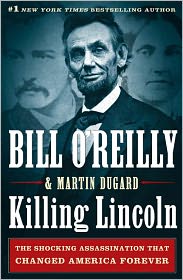
'Killing Lincoln' and How Errors Can Sneak Into a Textbook


That pompous schmuck Bill O'Reilly and his co-author Martin Dugard are currently being raked over the journalistic coals for substantive errors in their bestselling book, Killing Lincoln: The Shocking Assassination that Changed America Forever.
Civil War experts, including a book reviewer from the official magazine of the Civil War Society, have cited at least ten errors in the book. According to an article on Salon.com, assassination author Edward Steers Jr. cites these errors and more from the book:
  • A farm where John Wilkes Booth hid after the killing was not 500 acres, as the book noted, but 217 acres.
  • The book refers to John Ford's chief carpenter as John J. Clifford. In fact, his name was Gifford.
  • Lewis Powell, the man assigned to kill secretary of state William Seward, did not speak with "an Alabama drawl," as the book notes. Powell was from Florida.

These errors to the nonhistorian might seem petty, but suppose there were similar errors in a healthcare textbook? As a healthcare expert, what would you say?

You'd probably say the same thing that Mr. Steers said about O'Reilly's book: "If all of the above sounds like nitpicking, consider this. If the authors made mistakes in names, places, and events, what else did they get wrong? How can the reader rely on anything that appears in Killing Lincoln?"

The answer is complicated.

Every book has errors


Consider this: There are errors in every book published. Every, single one.

Don't take my word for it. Ask yourself, when was the last time you read a book that didn't have at least one misspelling or punctuation error, or an odd line break where there shouldn't be one, or any other error, factual or otherwise?

I'm guessing that you've never seen such a book, and neither have I.

The same is true for textbooks. Every acquisitions editor at every healthcare publisher has published books with errors in them. From the wonderful Rhonda Dearborn at Delmar, to the fabulous Joan Gill at Pearson, to the marvelous Katey Bircher at Jones & Bartlett, we have all published books with errors.

And we all absolutely and unequivocally hate it.

Our authors hate it even more. They work so very hard to create the very best possible book, and then, after the book publishes, they find this error or that and ask, "How did that happen?"

Here's how


That Pompous Schmuck's book aside, errors can creep into a book in nearly innumerable ways, from poor copyediting to a poor author, from reviewing the same content over and over again to not looking at it enough, from technical glitches to printer error.

We publishers put into place as many safeguards as we can to prevent errors from reaching the reader, and they work nearly all the time. But then, sometimes, for inexplicable reasons, one particular book will be beset with problems and will inevitably hit the shelves with more than the usual number of errors.

I suspect that's partly what happened to That Pompous Schmuck's book. I suspect — and that's all it is, a suspicion — that part of the reason there are so many factual errors was that the fact-checking team at the publishing house (Henry Holt, a division of MacMillan) fell a bit short of its goal. It happens.

Mostly, though, I think the errors, at least the ones I've seen, were the result of the author's lack of competent research, and that's a whole 'nuther ball game. The publisher can try as it might, but it can't overcome a bad author.

So in this case, let's blame — say it with me, now — That Pompous Schmuck!

Wednesday, September 21, 2011

5 Mandates for Preparing a Manuscript

Got yourself a book deal, eh? Excellent! Here are a few tips you'll need to keep in mind as you prepare your work for an editor. Well, I call them tips, but really, they're mandates.

Do 'em.

Mandate #1 No underlining!

You know that little underline icon  on your toolbar? (Alternately, you know that Control/Command-U keystroke?)

Ignore it. Don't click it. Don't touch it. Make like it never even existed.

That's right, the underline doesn't exist. If you want to underline a heading, book title, or pretty much anything else in your manuscript, use that little italics icon  instead. (Alternately, that Control/Command-I keystroke.)

The underline was used a long time ago, back in ye olde typewriter days, to indicate italics. Nowadays we've actually GOT italics, so use them.

Mandate #2 Stop making things look pretty on the page!

Your job as author is to present clinical content. Our job is to make that content look pretty on the page.

So don't be mucking things up with tabs in the middle of sentences and multiple spaces after a bullet so the text lines up on your screen. The reader won't be seeing your screen, number one, and number two, your editor will have to strip all of that extraneous garbage out of the manuscript. So don't put it in to begin with.

Mandate #3 No All-Cap Headings!


Please don't make your chapter title or any headings all capital letters. I know that all-cap headings are common but they're not universal.

Far better to use title case, which we can always and easily make into all caps if needed. But it's a huge pain to go the other way, from all caps, typed in on a keyboard, to title case.

So do everyone a favor: Use title case for all headings.

Mandate #4 Pay attention to heading levels!


If all of your headings are Times New Roman 12pt Bold, how will your editor be able to tell which headings are main headings and which are lower level headings?

There are several different ways of formatting head levels but I recommend the following:
Bold and Centered for the Chapter Title

Bold and flush-left for first-level headings

Italics and flush-left for second-level headings

Roman (not bold, not italics) for third-level headings

NOTE: Always check your publisher's author guidelines, though, for specific instructions.

Mandate #5 No more double spaces after a sentence!


I've said it before, and I'll say it again: Stop using two spaces between sentences.

Doing so is a leftover of the typewriter. It's archaic and insanely annoying. Plus, someone later has to delete them all anyway, so why put them in?

I'll bet you've got some mandates of your own. Let's hear 'em!

Friday, July 22, 2011

5 Key Qualities I Look for in Potential Authors

Acquisitions editors like me are always on the lookout for potential authors. We're constantly vigilant for individuals we meet who seem to possess those particular qualities we each see as requisite in someone who can get a good book written.

The qualities I look for might be different than those other editors look for, certainly, but I'll bet we're all looking for pretty much the same core qualities. Here's my list.

1. Ability to articulate thoughts verbally

Sounds like a no-brainer but it's really not. I've met many enormously dedicated, highly talented educators who struggle to articulate verbally their thoughts in conversation. They can whip up a mini-lecture on coronary blood flow in neonates, something they might have discussed many times before, but ask them to describe their teaching philosophy and they grapple for the right words.

Successful authors, before they've ever put word to published paper, seem to me somehow more able to articulate their thoughts than people who really want to be successful authors but who can't quite get there.

That said, I've worked with a few authors who don't articulate terribly well at first but as they move through the process, they become better at articulating thoughts verbally. But I haven't worked with many.

Tip: When talking with an editor or publisher, take just a moment to collect your thoughts before you speak. There's no rush. We're in this thing for the long haul.

2. Local knowledge, global understanding

To write a textbook that meets the needs of a national (and sometimes international) market, a potential author must possess at least some understanding of what's going on in their field nationally, not just what's going on in their own school or state.

I'm looking for people who can tell me about the trends, rules, and regulations in their own state and also about similar trends, rules, and regulations in other states. If someone doesn't care enough to pay attention to their own profession, if they don't follow news of their profession, if they play no role in their national organizations, then they probably won't be able to translate their knowledge adequately for a national audience.

Tip: Pay attention to your national organization. Join. Get involved. Attend conferences.

3. Drive and ambition

Authoring is hard work and demands a substantial commitment of time and resources. I look for people who give me a sense of themselves and how driven they are to succeed. If I have to talk someone into authoring, I'll never get a book out of them.

Tip: Be realistic about your own time and resources. Can you say without equivocation that you're willing to make a book a high enough priority in your life that the book actually gets written? Or do you see authoring as something you sort of work into your existing schedule somehow?

4. Follow-through

If you and an editor agree that you'll send a vision statement by such-and-such a date, then dag-nabbit, send it by such-and-such a date. The more delays there are in the earliest stages of creating a book, the less likely that the editor will sign you to a contract.

Tip: Follow through on commitments. It speaks volumes about your potential.

5. Sense of humor

I gravitate toward people who can laugh at themselves. I find that they accept editorial guidance more readily, are better able to navigate the sometimes tortuous paths of the publishing world, and are overall more sensitive to the remarkably diverse needs of the markets they're writing for.

Tip: So laugh, giggle, smile. Don't assume we editors are all so serious you have to put on airs to make an impact, you don't. Be yourself.

My next blog: 5 Key Qualities to Look for in a Potential Publisher.

Monday, July 11, 2011

2 Key Things Writers Need to Know About the Oxford Comma

The vaunted Oxford comma has been in the news lately. To wit:

Never heard of the Oxford comma, you say? What's all this fuss about the Oxford comma?

The Oxford comma is the comma that follows the last item in a series, just before the "and," "or," or some other conjunction. You might know it by its more popular name, the serial comma. (See below.)


Writers and English teachers know all about the Oxford comma. The rest of us, not so much.

Keys 1, and 2

To my mind, writers and authors need to know just two things about the Oxford comma, and two things only.

  1. The Oxford comma is helpful in managing lists. Most of the time we craft reasonably simple lists in which each item is independent and not tied conceptually to another item. Here are some examples:
  • The patient c/o nausea, vomiting, and diarrhea.

  • He grimaced, flexed his right leg, and pointed to his right lower quadrant

  • The drug is contraindicated in anaphylaxis, severe combined immunodeficiency, coma, reduced level of consciousness, or pregnancy.
But suppose one of the items needs to be clearly tied to another item? That's when the Oxford comma really shines. Notice the difference in meaning between these two lists:
  • The patient was visited by his wife, a co-worker and a friend.

  • The patient was visited by his wife, a co-worker, and a friend.
In the first, the wife was apparently the only visitor. In the second three people showed up.
  1. Conform to the publisher's style. Maybe you're a firm believer in the Oxford comma. Or maybe you would just as soon see it disappear forever. Whatever you think actually makes no difference when you're writing for publication. You need to know whether the publisher uses it, and if so, then you use it too.

    To find out what a particular publisher prefers, check a few of their books, journals, or magazines. Do you consistently see the Oxford comma? Then use it.

    If you don't see the comma used consistently, then assume you can either use it or ditch it, as you see fit.

My recommendation

Use it always. Makes life so much easier.

Now go forth and write, create, formulate, scribe, scribble, and publish!

Thursday, May 19, 2011

5 Reasons We Have Chapters Reviewed by Experts

So, you're written a few chapters in your textbook and they've been fine-tuned by a developmental editor. Now what?

Now come the chapter reviews.

We'll send your manuscript to a number of experts for their feedback, and we'll pay close attention to what they say. That's because a manuscript review serves different purposes than a proposal review. Here are five of those purposes.

1. Check for clinical accuracy

The most important reason to obtain manuscript reviews from subject matter experts is to make sure that all the clinical content is fully accurate. Yes, you're authoring a book, and yes, you're an expert too, don't worry, no one can take that away from you.

Here's the thing. Whatever you write in the book, when it's finally published, will be the Word. And the Word will be yours. And so will the lion's share of the responsibility for errors in those Words.

We do our part, certainly, and we want to help do your part too. So we show your Words to people who can best point out where they might be confusing, incomplete, or inaccurate.

Even if they misread some Words and think you've made an error but actually you haven't, that's good too. It tells us where there are slight hiccups in the writing, so we can smooth them over.

All praise the Reviewers!

2. Double-check features and flow

You know all those wonderful features you planned to include in the book—key terms, themed sidebars, case studies, whatever? Well, we want to see if they actually work and do what we intend them to do.

If the reviewers confirm what we thought, yay for us. If not, we can fix the issues and move ahead.

3. Verify the vision

When you set out to write your book, you and your acquisitions editor formed a clear idea of what the book would be, who it was for, and what would make it stand out above the crowd. Now it's time to make sure we stuck to that vision or, if we didn't, to make sure our deviations made sense.

4. Procure promotional points of view

The reviewers love your book, don't they? Of course they do. We use manuscript reviews to obtain quotes we can use in promotional materials and give to our sales reps, so they better understand the key sales points about the book and how best to sell it.

When you have a reviewer write something like, "This is an extremely well-written text, and I can't wait to adopt it"—that's gold.

5. Seed the market

Manuscript reviews also help potential adopters become invested in the product. If they think their feedback is helping, if they think we really listen to it and make adjustments accordingly—and believe me, we do—a kind of emotional bond can begin to form between the book and the reviewer.

It takes time, but it pays off. When the book publishes, those reviewers will be more likely to adopt the book and recommend it to their colleagues at other schools.

And you can take those Words to the bank.

Wednesday, January 19, 2011

5 Tips for Writing a Vision Statement

I often ask authors to develop a vision statement for their proposed book. It helps me get a fix on the author's grasp of the project and also establishes common ground from which to guide the project.

Let's take a closer look at a vision statement and how to write one.

What is it?

A vision statement is a declaration of the effect you want your book to have on the individual reader and on the community of readers that make up your profession. The best vision statements communicate the author's rationale and philosophy, and declare a promise of benefits to the reader.

An educator or student should read a vision statement and think, "Using this book is going to help me succeed."

Equally important, the vision statement serves as an editorial compass for your book throughout its development. As work progresses, those working on your book can refer to the vision statement and ask, "Are we still on track? Are we furthering the goals of this book?"

5 Tips for writing a vision statement

  1. Use action verbs rather than passive ones.

  2. Explain in everyday language what you're trying to accomplish.

  3. Focus on the big picture. Don't discuss the "how" of the concept but the "why" and the "what."

  4. Provide a brief history of the title, if appropriate.

  5. Imagine you're trying to explain your book to a fellow faculty member. Write what you would say.

5 Tips for Writing a Great Lead for a Textbook Proposal

The lead for a proposal should whack the editor upside the head with how great the book will be.

That's right, I said, "whack."

Too often I see proposal leads that sit there like a plain burger on a bun, when really, I should be seeing a burger congested with condiments.

Follow these five tips for making your proposal look yummy. (Hmm, I must be hungry.)

1. Make the first sentence shine

That first sentence is important. It tells the editor right away whether you know what you're doing. Be clear. Be focused. Get to the point.

Here are a few examples of solid lead sentences:

  • This book is meant to build on the quality and reputation of the current series of Notes books, as it applies to the medical student and junior resident interested in Dermatology. [Tells me immediately what the book is and where it fits.]

  • On a daily basis, medical office personnel at all levels in the health-care profession may come in contact with some form of medication. [Tells me why the content is important.]

  • The purpose of the proposed book is to serve as a clinical tool for medical assisting students through their clinical courses as well as their externship and employment in the medical setting. [Gives me a sense of the breadth of the market.]
I'd rather see more active verbs used in these example, but each one gets to the point quickly and helps draw me in. Speaking of active verbs…

2. Use active verbs

I can't say this enough. Active verbs pull the reader into the content and keep him going. Use them!

Instead of "This book will be used by medical assistant students to…," write "Medical assistants need this book to…"

Instead of "The goal of this text is to…," write "This book will provide…"

Instead of "The foundations of practice will be covered in the first chapter," write "The first chapter covers the foundations of practice."

See the difference?

3. Indicate the market

Describe in that first paragraph the specific markets the book will aim for. Don't say, "All healthcare professionals—doctors, nurses, even medical assistants!—will want to buy this book."

Not even Stephen King's books sell to everyone. His book sell to people who enjoy reading scary novels. People who enjoy biographies, say, might not find his books particularly compelling.

Your book will be the same way. It won't meet everyone's needs. It can't.

Ask yourself, If I could describe the perfect reader of my book, what would he or she look like? If the person would be a physician assistant, that's your main market.

4. Point out the academic level you're planning to reach

Many textbooks aim to reach entry-level students. The titles of these books typically include such indicator words as basic, fundamental, essentials, or some such. Same with texts geared for more advanced markets.

You may not include one of those indicator words in your proposed book title, but you should point out in the lead which level your book will hit or at what point in the academic cycle it will be used in.

5. Explain how your approach differs from others'

You may be thinking about writing a textbook because you believe that what's out there already doesn't meet your needs. You have something to say, a unique or interesting approach to teaching the content.

Explain that approach in tight, concise terms.

It's harder than it seems. That's why I ask potential authors to provide a vision statement for their book.

I explain vision statements as a modified version of what you would tell someone about your book if you were on an elevator and had only 5 or 6 floors to explain. The best vision statements communicate the author's rationale and philosophy and declare a promise of benefits to the reader.

You may want to craft a vision statement first and then put into the lead the "meat" of that statement.

OMG, I said "meat."'

I must be starving! Time for lunch.

Wednesday, December 22, 2010

3 Keys to Getting Your Textbook Proposal Read for Real

You have an idea for a textbook or clinical resource. Your book could be the next best thing to squeeze-bottle ketchup. It could make you and the publisher very happy. Wonderful!

But if the editor doesn't read your proposal, your book, your baby, your crowning glory might never see the printed page.

Never fear. Here are three keys to make sure the editor reads and truly considers your proposal.
  1. Find the right editor. Sounds like a no-brainer, but it isn't. A publishing company might have 10, 20, even 30 or more editors signing titles in various disciplines. Figuring out which editor is right for your book might prove confusing.

    To find the right editor, go first to the publisher's website and look for an author's area. (For a list of author areas for the major healthcare textbook publishers, check my blog post at http://andymcphee.wordpress.com/2010/10/26/tips-for-writing-a-solid-book-proposal/.

    Look for a list of editorial contacts, and then identify the editor handling the discipline that most closely resembles the discipline you'll be writing for.

    Alternately, you can find a book similar to yours and published by the same company, and then check the masthead for the editor's name. Look for Publisher, Sponsoring, or Acquisitions in the person's title.

  2. Write a compelling proposal lead. Put your best effort into the lead of the proposal. That's where you'll keep or lose the editor's attention. In that lead, tell the editor:
  • Which markets the book is designed for. Be specific. Rather than "The book will appeal to medical assistant programs," write "The book will appeal to medical assistant programs that offer introductory courses in medical billing and reimbursement."

  • Why your approach to the content is superior. Again, be specific.

  • Why you're the right one to write the book. Toot your horn in specific ways. Rather than "I just love this topic," write "My background as a lab tech and 8 years of teaching clinical medical assisting give me an edge."
  1. Make the proposal error-free. This is must. If the editor finds one spelling error, well, okay. But two? Three? More? Forget it. You need correct spelling, punctuation, capitalization—everything. Show the editor that you're a writer.
When I see a proposal from someone who gets all three keys dead-on, oh, I'm reading that proposal.

Wednesday, December 15, 2010

What Should the Title of Your Textbook Be?

Compared with writing an entire textbook, you would think coming up with a good title would be easy, wouldn't you?

Sometimes, yes, it is easy, but mostly it's kind of a pain. Let me give you a few tips for crafting a title that will make your editor happy.
Do your research

When trying to figure out a title for your book, research the market first. Find out which books compete directly with yours, and look for commonly used words, such as:

  • Complete

  • Comprehensive

  • Essentials

  • Fundamentals

  • Guide

  • Handbook

  • Manual

  • Mastering

  • Practical

  • Principles

  • Review

  • Understanding


Those words are common for a reason, they provide insight into the type of book it is. You may decide to use one of these, and that's fine but it's just the beginning.
Frame the right tone

Many first-time authors try for a cutesy title, like Medication Marvels for a pharmacology book, or Is That a 301.4 or 568.7? for a medical coding book. Don't make potential purchasers guess what the book might be about, let them know immediately.

Sometimes, though, a cutesy title actually works. For instance, the title of our popular How to Survive and Maybe Even Love Nursing School is kinda cutesy but for the content and the author's presentation, it works really well.

By and large, though, stick with a straightforward title.

Ditto for the subtitle, if needed.
Keep it short and sweet

Short titles are almost always best for a lot of reasons, but mostly because they're easy to design around and they stand out to purchasers because they're easy to remember. In healthcare publishing, though, we're often publishing for a specific market, so sometimes long titles can't be helped. For instance, "pharmacology" and "medical assistants" might both need to be part of a title. That's fine, because potential purchasers will look for those words to know about the book. Just don't hide them in a bunch of other words unless it's absolutely necessary.
Think "Amazon"

Make sure that your title is search-friendly. Think about the last time you looked for a certain kind of book on Amazon.com. Let's say you're looking for a pharmacology book for allied health students, and you typed "pharmacology allied health" into the search box. You probably got back mostly titles that have those words in the title or subtitle. You might not have seen Medication Marvels in the results because it didn't have "pharmacology" in the title.

That's why we publishers often use a fairly long subtitle, so searches on Amazon and other distributor websites will include the book in their results.
The title "decider"

The good thing for textbook authors is that the final decision about a book's title doesn't belong to them anyway. It belongs primarily to the acquisitions person and ultimately to the company itself. That's because the title is a marketing and sales tool more than anything else.
One more little thing

Before I let you go, do me a favor. When you tell people what your book is called, don't say, "My book is entitled Such-and-So." It's not entitled, it's just titled.

Thanks.

Friday, December 10, 2010

Contributors and Co-Authors


First-time authors often feel overwhelmed with the process. They recognize that they need help but aren't sure how to get it.

If that's you, talk to your editor. You might need a contributor or co-author.

Contributor

A contributor is someone who provides content on a fee-for-hire arrangement. If you want someone to write a chapter on, say, arterial blood gases, you'd ask an expert in that topic to supply a chapter in return for some remuneration, the amount of which is up to you and the contributor to agree on.

Contributors are paid when the book publishes, to avoid situations in which contributors are paid but their content is never used or the book never publishes. They're paid once and that's it.

Contributor payments come directly out of the author's advance, so the more a contributor is paid, the longer it will be before the author receives royalties on the book. Common amounts paid vary from a couple hundred dollars per chapter to a thousand or more, depending on the level of expertise of the contributor, the size of the chapter, and the anticipated amount of work required.

Co-author

A co-author, on the other hand, is someone who shares in the royalty agreement with the author and publisher. Co-authors are expected to do much more than contributors, and so are compensated at a higher level.

They generally receive no money up front, unless so stated in the Author Advance clause of the contract. Co-authors, like the main author, are compensated through the sale of their book.

Choose wisely

If you choose the co-author road, make sure you choose someone you can work with for a long time. Contractually, author teams can't legally break up without the mutual consent of all parties involved. Most of the time, author teams form because each member already knows, respects, and likes the other members, and few problems ensue.

However, sometimes that's not the case and people who get together for the first edition grow to dislike each other or otherwise drift apart. Hey, that's life.

So if you bring on one or more co-authors, make sure they're people you absolutely can work with.

Just sayin'.

Tuesday, November 23, 2010

What Are Key Terms in a Healthcare Textbook?

New authors often want to know how you decide which term introduced in a chapter should be listed as what we often, but not always, call a key term. I just answered this question for an author team today, so I figured it's a good time to post it too.

A key term is a term important and new enough to the chapter to be highlighted in some way, usually boldface, and defined at its point of entry. If the term has been used in previous chapters, there's usually no need to include it again. However, if it's new and you're defined it, it should appear in the list of key terms.

Abbreviations may or may not be used as key terms. For my projects, I recommend that they not be included. The whole term with the abbreviation, sure, but just the abbreviation? No.

The way I'd like to see abbreviations handled is to spell out the term at first use, using a construct like one of these.

  • An electrocardiogram (ECG) is a diagnostic test…

  • An electrocardiogram, commonly called an ECG, is a diagnostic test…

  • An electrocardiogram, or ECG, is a diagnostic test…


But that's just me.

Thursday, November 18, 2010

All About Fair Use

"Unfortunately, the only way to get a definitive answer on whether a particular use is a fair use is to have it resolved in federal court. Judges use four factors in resolving fair use disputes..."


So begins this Stanford University Library article that explains the concept of Fair Use better than anything I've seen. It also explains the di minimus defense and the potential benefit of disclaimers.

Check it out!

http://fairuse.stanford.edu/Copyright_and_Fair_Use_Overview/chapter9/9-b.html

Thursday, November 4, 2010

How to Develop Strong Textbook Features

In the world of healthcare textbook publishing, having a strong set of features can prove critical in gaining adoptions. A feature is an item in or characteristic of a book that be used on its own to sell a book.

Let's take a look at features and how to build a strong feature set.
What are features?

The term feature is used differently depending on the type of publishing being done. Features can include any of the following, presented here in alphabetical order:

  • Case studies

  • Chapter outlines

  • Chapter summaries

  • Citations of an association's standards and guidelines

  • Student exercises (typically at the end of a chapter)

  • Key terms

  • List of outcomes or objectives

  • Online resources

  • Pronunciation of key terms

  • Reading level

  • Recurring sidebars (boxed elements that may or may not fit a particular theme)

  • References or a bibliography

  • Type of organization (alphabetical, body system, and so forth)

  • Unusual or unexpected appendices

  • Use of concrete examples to explain key points


A sales representative talking with a faculty may be able to point to any of these items and say, "Look what this book gives you that others don't." We publishers try to help authors develop a compelling set of features so that faculty and other potential purchasers see the book as one they just have to buy.

Oh, and note that I didn't write "up-to-date" in any of these features. Being up-to-date is expected for any book we publish for health care. If it's expected, it's not a feature.
Building a feature set

Consider these questions when building features:

  • If you were teaching this course with this book, what features would you want? For instance, is the level of complexity within each chapter worthy of a detailed chapter outline, a simple one, or none? Would your instruction of this kind of content be enhanced through the use of case studies?

  • Would it be helpful to align your content with an association's guidelines or standards?

  • What features do your competitors have? What features could you develop that would give your book a leg up?


  • [caption id="attachment_611" align="alignright" width="300" caption="One kind of themed sidebar. Note the icon next to the heading "Reality Check.""][/caption]

    What kinds of recurring sidebars that could be repeated in all or many chapters would help make the interior design more engaging? Could the sidebars be categorized somehow so they could be given a special icon? Think of categories like legal challenges, ethical dilemmas, patient education, avoiding malpractice, and so forth. If you can develop two or three themes like this, they would serve to break up the text, give the reader something quick but important to read before the main text, provide a sense of cohesion throughout the book, and give the designers an additional element to use to create interesting pages.


If you plan your feature set well, you'll save yourself a lot of time during development and you'll sell more books too. That's a feature all authors can live with.

Tuesday, October 26, 2010

Tips for Writing a Solid Book Proposal

Writing a book proposal can be a difficult and time-consuming task, but if approached in a planned, systematic way the process should go smoothly. I offer here some basic tips for writing a good textbook proposal.

  • If you don't have a copy of the proposal guidelines from the publishers you're targeting, get one. Nearly all publishers post detailed guidelines on their websites. Here are major healthcare publishers and their proposal pages (accurate as of this posting):


  • When discussing the market, be sure to identify your primary market and why members of this market would choose your book over currently available texts. Cite examples and significant trends whenever possible.

  • Don't tell the editor how wonderful your book will be and how it will be perfect for everyone. No book is perfect for everyone, not even the most fantastic novel ever written, whatever that may be. Every book, including yours, must be aimed at one or more particular markets, and you need to be able to explain exactly why your book will meet the needs of those markets.

  • Describe each feature in clear detail. Basically a feature is something that we can readily promote in marketing materials, such as critical-thinking activities, testing exercises, recurring sidebars, and study outlines. Features don’t include being up-to-date; that’s something that every reader expects of a newly published book. Being accurate isn’t a feature either, for the same reason.

  • Although your book is designed to be unique, it’s important for the editor to hear how you see your book being positioned among the various competitors. You should always include a brief comparison of each competitor. Be sure to list the author, title, edition number, publisher, copyright date, number of pages, and list price for each competitor.

  • Don't forget to talk about the ancillaries that will complete the learning package. Ancillaries include instructor’s guides, accompanying software, PowerPoint presentations, and other supplemental materials that enhance the marketability of the text.


As difficult as it may be to write a winning proposal, keep in mind that it ain't nuttin' compared with writing the book itself!

Wednesday, August 4, 2010

Before You Author, Ask the Right Questions

Every healthcare textbook publisher asks a single question of major importance before publishing a book: Is this the right author writing the right book at the right time for the right market?

Every potential author should ask the same kinds of questions:

  • Am I the right person to write this book?

  • Does my book really make sense?

  • How is my timing?

  • Does the book meet a clear market need?


Let's take them one at a time.
Are you the right person?

You're the right person if you feel passionately about the topic; you have solid, quantifiable experience in the topic and consider yourself an expert; your credentials indicate that you have a reasonable background to write expertly about the topic; and, for a textbook, you have substantive experience teaching the topic to learners.

Take this example. Betty is a CMA (AAMA) with a BS degree in, say, biology. She is also an RN and has been MA Program Director at a community college for 6 years. She wants to write a book about clinical skills for MAs. Does she have what it takes (superficially, at least) to author that kind of book? I'd say yes, absolutely, she seems to have a good skill set for that.

What if Betty wanted to write a book instead about teaching skills for new allied health faculty? Does she have what it takes? I'd say no. She might be a great teacher but her educational credentials don't support her being an expert on the topic. For a book like that, she should probably have an Master's in Education and have a substantially broader experience than solely in medical assisting.
Does the book make sense?

By "does the book make sense," I mean is the topic is broad enough and pertinent enough to sell a significant number of copies? Some topics are just too small for a book but would make a great journal article. They're so niche-oriented that it wouldn't make sense for most publishers to invest in a book that won't sell enough copies to turn a profit.

If your book would fit a course you know is offered by all or most programs, then you've got yourself a solid idea. If it would fit some programs but not others, or if the book covers a section of content within one or more courses, you'll have a more difficult time "selling" it to a publisher, but go for it anyway.
How is my timing?

For courses that already exist, such as med term, A&P, pathology, and the like, timing isn't critical. There are already books out there and the course already exists.

But for topics that seem "cutting edge," topics that are on the cusp of becoming standard but aren't there yet, you're in a tough spot. Some publishers certainly will risk taking on your book, but because education in general—and healthcare education in particular—move so slowly, most publishers will have second thoughts about publishing it. Which leads well into the last question…
Does the book meet a clear market need?

If the topic is too new and untested, then deciding whether your book on it would meet a clear market need becomes much more difficult. The safest book for a publisher, the one with least risk, is one built to compete with at least one other similar product. In that case, it's a let's-do-ours-better kind of approach, which is a nice approach to have. Build a better mousetrap, eh?