Showing posts with label Publishing. Show all posts

Thursday, November 21, 2013

10 Qualities of a Successful Textbook Author-Publisher Relationship

I've written before about what makes for a successful textbook author, and wanted now to talk about what makes for a successful textbook author-publisher relationship.

In my view, successful author-publisher relationships are those in which both sides:

  1. Are deeply devoted to producing the best possible product for the market, not necessarily the highest moneymaker possible.
  2. Stay focused on the people they're invested in —  the student.
  3. Work together to develop a clear vision of how they can make a better book.
  4. Communicate with each other openly, honestly, and professionally.
  5. And regularly. Not haphazardly, but according to a mutually agreeable schedule.
  6. Are always thinking of ways to improve and promote the book.
  7. Bring their most reasoned and compromising self to the table.
  8. Help keep each other on task.
  9. Make each other a priority in their daily schedule.
  10. Share a laugh and a good, stiff drink once in a while.
But that's just me.

Wednesday, August 8, 2012

Niche Publishing in Health Care Education


Lenny Kravitz
Lenny Kravitz might not need to fit into any particular niche, but health care textbooks certainly do.

Publishers identify each book's particular niche, or market segment, during the earliest stages of development, typically during concept development. We need to figure out who will buy the book before we can actually write the book.

We work to identify markets that offer the greatest opportunity for sales. We love when a book can appeal to a large market. Wheeee!

Some books, though, are made to appeal to a small market. Those might be a tougher sell to a publisher.

Consider two examples:

  1. Textbook A is designed for physician assistants (PAs) in the U.S., a market of roughly 84,000. Capturing even 10 percent of that market could prove profitable for a publisher.
  2. Textbook B is designed for PAs working in pediatric ophthalmology offices, of which there might be, I don't know, a few hundred? That would be a considerably tougher sell for most publishers.

That doesn't mean that Textbook B would never be published, but it does mean that the author will have to be more diligent in finding just the right publisher.

Wednesday, August 1, 2012

Authors Are Humans Too

Authors aren't robots, they're human. Oh, well.
We textbook publisher-types tend to be a patient lot. We work with authors who, as it turns out, are human.

Humans get sick. They get pregnant. They have babies.

They care for aging or ill parents.

They lose their jobs or have to take on more and more responsibilities in less and less time.

They're busy, and busy people don't always do as much as they want to do, don't complete everything they want to complete.

Go figure.

So we wait. We nudge. We cajole, tease, and yes, sometimes threaten. (Though, truth be told, that almost never works.)

We do our best to protect the publishing company's interests, but in the end, we're dealing with humans.

A colleague at a project update meeting once jokingly said, when discussing some of the travails yet another author was experiencing, that he (let's make the person male this time around, shall we?) had had it with authors. From now on, he would have a new rule: "No heart attacks. No pregnancies. No babies. Welcome to F.A. Davis!"

We all roared because we knew exactly what he was talking about.

Life happens. And when it happens to authors, we publisher-types wait it out and hope for the best.

Because we're human too.

Dang it.

Wednesday, May 2, 2012

Facebook, LinkedIn, or E-Mail: How to Communicate with Your Publisher

With the enormous popularity of Facebook, LinkedIn, Google+, and other social media  have come an increasing number of ways for people to communicate with one another.

And that's good. But not always.

I'm finding that more and more people are contact me using Facebook or LinkedIn. I don't mean first-time contacts, which is absolutely fine, the more the better. I'm talking about people I've been consistently doing business with using social media to contact me instead of e-mail. And on weekends too.

Nuh-uhn.

Here are my Four Rules of Engagement for business communications in social media.

Rule #1: Keep typical business hours.

l'm not a fan of business contacts who try to message me on Facebook after business hours. It's bad enough they're using Facebook to communicate during business hours, much less after.

You might have time only at night to communicate with a publisher because you work at your regular job during the day, but I work during the day too. That's my time to communicate with business contacts.

Nighttime, that's mine. If you want to contact me after hours, please use e-mail.

Rule #2: Use e-mail for anything important.

It's no accident that e-mail continues to thrive even with all the other ways to contact people. It works.

If you e-mail me, I can always go back later and find the e-mail, usually pretty quickly. That's important for lots and lots of reasons, not the least of which is to remind me what I said.

I might be able to find a particular message on Facebook, Google+, or LinkedIn, but it will take me waaay longer. Those sites just aren't made for archiving messages. They do archive them, but they don't make it easy to use the archive.

Rule #3: If you start with social media, move to e-mail as soon as possible.

Sometimes the only way you can find a publisher, or we can find you, is through social media. And that's peachy keen.

But get off social media as soon as you can and use e-mail.

See Rule #2.

Rule #4: Use e-mail.

Did I say anything yet about how you should use e-mail for business correspondence with a publisher?

I did?

Oh, good. Use e-mail.

Or, you know, that thing with the cord. The, um, whatchacallit? Oh, right.

A phone.

Sunday, April 8, 2012

3 Tips for Your First Conversation with a Publisher

First impressions count. They're not always correct, of course, but they count nonetheless.

When you're planning to be an author, your first conversation with a potential publisher counts just as much.

To help you make the best first impression you can, follow these tips.

#1 Be honest.

The publisher will most likely ask you lots of questions about your book idea. Answer as honestly as you can. If you don't know the answer, say so.

Sometimes we ask about the market you think your book will be written for. You don't have be exact or even correct, because chances are that the market you first envision will change as you discuss the book in more detail.

If you're unsure about the market, say so. But don't get ahead of yourself and say that the book is for everyone. No book is for everyone, not a single one ever written including the Bible. (For more on writing for a specific market, see "Picture the Person You're Writing For."

#2 Be humble.

I've had potential authors actually argue with me about how and to whom their book should be written and marketed.

Don't do that.

When it comes to publishing, the publisher is the expert, not you. So listen to the publisher. If you think you disagree with something, that's fine, but don't take the publisher on from the point of your being an expert. Take him on from the perspective of wanting to learn.

#3 Be professional.

Sounds like a no-brainer but really, it isn't. We want our authors to feel comfortable with us, to feel open and talk with us as colleagues.

Sometimes, though, that familiarity breeds conduct a bit too, shall we say, loose.

Your publisher is still, when comes to authoring, your supervisor, in a way, so act accordingly.

Don't drink too much at dinner. Don't disparage colleagues. Don't invite friends or family members to a publisher's event without asking the publisher first.


The best tip, though, is to just be your very best you. That will be more than enough.

Thursday, January 12, 2012

5 Tips for a Great Manuscript Review

By Guest Blogger Donna Morrissey

A key ingredient for publishing a successful textbook is the review process. Before a book is published, while the manuscript is still in draft form, publishers will seek out the opinions of other experts in the field to read the manuscript and identify weak areas and incorrect content as well as the strengths that make the book worth buying.

This feedback is critical for helping authors fine tune their work and for ensuring the book's success. As any writer can attest, one can lose sight of the forest while in the midst of the trees.

As an author gets deeper and deeper into the writing of individual chapters, it can be difficult to maintain continuity between chapters and keep track of all the details. For reviewers, particularly instructors who are involved in making decisions about what textbooks to use for their courses, it's a good way to keep an eye on the latest trends.

So what makes for a good review?

#1 — A good review focuses on the content as a whole. When teaching a course, does this content explain the material clearly? Will students understand what they're reading? Will they gain the knowledge needed from reading these chapters? Will instructors need to develop a host of supplemental materials to fill in the blanks that the book does not address?

#2 — A good review compares the manuscript to the textbooks they're already using. Does the new book do a better job of explaining the important concepts? Does it cover more topics than their current textbook or is it ignoring important topics that one would expect to see? Does it provide the most current information? Does it identify other resources students can easily access if they want more information?

#3 — A good review examines the learning outcomes or objectives given at the beginning of the chapter. Are they clear? Are they attainable? Are they practical? Will a student be able to accomplish these objectives after reading the chapter?

#4 — A good review also examines the review questions given at the end of the chapter. Do they prompt the student to think about what they read or can they copy and paste the answers from the text? Are the questions relevant to what's covered in the chapter? Do they assume more than what a student of this course would be expected to know?

#5 — Ask: Are key terms clearly identified and defined? Do the terms help broaden a student's vocabulary and knowledge? Do the terms help students deepen their understanding of the subject?

These are all elements authors and publishers need to know are being done well. A textbook that does not explain the subject, fails to inspire students to think critically about the subject, or does not provide students with tools to help them transition from understanding the concept to putting it into practical application is not a good textbook. Reviewers who provide this type of feedback are a valuable resource for publishers, authors, and for the market in general.

What does NOT make for a good review?

What does NOT make for a good review are reviewers whose comments focus on the mechanics of writing or the more technical issues. Many reviewers return chapters of manuscript with pages filled with notes about misplaced commas or typos. Publishers typically hire people to fix those mistakes. They're called copyeditors.

Reviewing drafts of chapters is understandably difficult. It can be distracting to read through a text that's filled with dangling participles, passive verbs, and split infinitives. For people who love language and writing, it can be hard to resist the urge to delete that unnecessary comma or insert that critical semi-colon or circle that annoying typo. I can respect that.

However, reviewers need to keep in mind they were approached to review a manuscript because they possess a level of expertise about the subject at hand and not because they have mad English skills. As a developmental editor, part of the job is to help guide authors in their writing to ensure they are expressing the content in a clear, concise manner that is useful to students and instructors.

Although a DE may be fairly knowledgeable in many areas, most of them aren't experts in any one particular area. Receiving solid feedback from reviewers can confirm that the authors are on the right track or give them the evidence that tells them a new direction is needed.

Copyeditors, on the other hand, have a completely different set of skills. They are trained to spot the smallest detail and the slightest wonkiness in sentence structure. The range of their knowledge extends from the most glaring of spelling mistakes (loose vs. lose is a favorite) to the finest detail of semantics and word selection (read that last paragraph...should it be 'ensure' or 'insure'? Are you sure?). They can recite their prepositions on command and know the differences between an en dash, an em dash, and a hyphen. They'll go to the mat to defend their placement of commas and apostrophes and woe betide the person who uses "it's" or "its" incorrectly.

Copyeditors may seem a bit obsessive, but that's why we love them. They'll take those draft chapters and vigorously disinfect them from spelling errors, grammatical errors, and ambiguous wording. By the time the manuscript gets to the printer, it will be as smooth as a baby's bottom with not a blemish in sight. Trust in this, reviewers.

So, let go of your inner copyeditor and tell us: After this book is published, will you use it?

Tuesday, November 15, 2011

F.A. Davis Changing Its Name to FAD.co

Executives at the world-famous healthcare publishing company F.A. Davis announced today that the company's name will henceforth be known as FAD.co.

Fad, indeed.

I'm being fascetious, of course, F.A. Davis is not changing its name. Executives here are much too intelligent to do something so dumb. Unlike the poor folks at Overstock.com, who changed the company's name this past June to "O.co," and who have just decided to change it back to Overstock.com.

They haven't been the first. Other companies have tried to rebrand themselves, including Netflix, Hewlett-Packard, GMAC, the Gap, and Bank of America, and have failed miserably. Add Overstock to that pathetic list.

Stick with what works


In publishing, we take great effort to brand our books in the most effective way possible. Not all books get branded, of course, but many do.

Consider Taber's Cyclopedic Medical Dictionary, our bestselling medical dictionary. I cannot imagine under any circumstances the company changing its name to, oh, I don't know, TCMD. Or, worse, T.

Here are other "book brands" currently under the F.A. Davis roof:

We would change the titles of these brands at great peril, I believe.

The lesson for you


The lesson for you, dear reader, is this: When a publisher has made a commitment to a series or suite of books, you can expect that particular set of products to stick around for quite some time.

You can further expect that most or all of the books in that set are successful, which should increase your trust in the brand overall. If you like one, chances are excellent that you'll like the others too.

And you can take that advice to O.co. Er, I mean, the bank.

'Killing Lincoln' and How Errors Can Sneak Into a Textbook


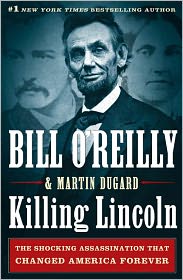
That pompous schmuck Bill O'Reilly and his co-author Martin Dugard are currently being raked over the journalistic coals for substantive errors in their bestselling book, Killing Lincoln: The Shocking Assassination that Changed America Forever.
Civil War experts, including a book reviewer from the official magazine of the Civil War Society, have cited at least ten errors in the book. According to an article on Salon.com, assassination author Edward Steers Jr. cites these errors and more from the book:
  • A farm where John Wilkes Booth hid after the killing was not 500 acres, as the book noted, but 217 acres.
  • The book refers to John Ford's chief carpenter as John J. Clifford. In fact, his name was Gifford.
  • Lewis Powell, the man assigned to kill secretary of state William Seward, did not speak with "an Alabama drawl," as the book notes. Powell was from Florida.

These errors to the nonhistorian might seem petty, but suppose there were similar errors in a healthcare textbook? As a healthcare expert, what would you say?

You'd probably say the same thing that Mr. Steers said about O'Reilly's book: "If all of the above sounds like nitpicking, consider this. If the authors made mistakes in names, places, and events, what else did they get wrong? How can the reader rely on anything that appears in Killing Lincoln?"

The answer is complicated.

Every book has errors


Consider this: There are errors in every book published. Every, single one.

Don't take my word for it. Ask yourself, when was the last time you read a book that didn't have at least one misspelling or punctuation error, or an odd line break where there shouldn't be one, or any other error, factual or otherwise?

I'm guessing that you've never seen such a book, and neither have I.

The same is true for textbooks. Every acquisitions editor at every healthcare publisher has published books with errors in them. From the wonderful Rhonda Dearborn at Delmar, to the fabulous Joan Gill at Pearson, to the marvelous Katey Bircher at Jones & Bartlett, we have all published books with errors.

And we all absolutely and unequivocally hate it.

Our authors hate it even more. They work so very hard to create the very best possible book, and then, after the book publishes, they find this error or that and ask, "How did that happen?"

Here's how


That Pompous Schmuck's book aside, errors can creep into a book in nearly innumerable ways, from poor copyediting to a poor author, from reviewing the same content over and over again to not looking at it enough, from technical glitches to printer error.

We publishers put into place as many safeguards as we can to prevent errors from reaching the reader, and they work nearly all the time. But then, sometimes, for inexplicable reasons, one particular book will be beset with problems and will inevitably hit the shelves with more than the usual number of errors.

I suspect that's partly what happened to That Pompous Schmuck's book. I suspect — and that's all it is, a suspicion — that part of the reason there are so many factual errors was that the fact-checking team at the publishing house (Henry Holt, a division of MacMillan) fell a bit short of its goal. It happens.

Mostly, though, I think the errors, at least the ones I've seen, were the result of the author's lack of competent research, and that's a whole 'nuther ball game. The publisher can try as it might, but it can't overcome a bad author.

So in this case, let's blame — say it with me, now — That Pompous Schmuck!

Thursday, September 1, 2011

3 Things You Probably Didn’t Know About the High Cost of Textbooks

Man, are textbook publishers getting a bad rap nowadays, or what?

There's even something now called the Textbook Rebellion Cross-Country Tour, and no, I'm not giving you the link to the tour, you'll have to find it yourself. The "tour" features two so-called mascots: "Mr. $200 Textbook and Textbook Rebel," according to a Flat World Knowledge press release, "in spectacular larger-than-life costumes, who will help local volunteers distribute cost-saving tips and collect petition signatures."

Seriously? I mean, look at this:


A SpongeBob wannabe being chased around campus by a snarky smoker in a bad suit? And the snark is supposed to be a publisher? Grrrr.

Yes, I'm a little peeved at the moment.

The main issue, of course, is the rising cost of college textbooks. I understand that, I really do, and yes, some publishers are jacking up their prices unnecessarily. I wish they wouldn't, but they do.

The rest of us, though, are getting a bum rap, and here are three reasons why.

Reason #1: The "Just Gotta Have It" syndrome

Years ago, before e-mail, the internet, and iMacs, before Amazon, e-books, and even Angry Birds Halloween, there was a time when textbooks came with nothing for faculty but an instructor's guide. In it you got some lecture notes, quizzes, tests, and maybe even a few classroom activities.

Today, if a publisher even thinks about offering just a measly instructor's guide with a textbook, nothing else, we would get run out of Dodge on a hardcover rail. Today faculty just gotta have at least:

  • Full set of lecture notes in PowerPoint format, one or more PowerPoints for each chapter

  • Instructor's guide, yes, but with dozens of classroom activities; various syllabi for an 8-week, 10-week, 12-week, 15-week, 18-week, heck, even a 23.7-week course; even more test items, and don't you dare repeat the test items in the electronic test bank, they all have to be different; images for coloring, step-by-step guidance for teaching every piece of information in every chapter; indexes that coordinate every piece of information with every other piece of information in all the various ancillaries

  • Electronic test bank with a lot of test items, a real lot, hundreds—no, make that thousands of 'em, more than any instructor could ever dream of using, because, after all, it's about the numbers

  • Interactive software—not that students ever actually use the software, it just needs to be available, is all

  • More, more, and more, stuff we don't even know about yet—yes, we want that too.

Some publishers have started to charge for some of those ancillaries, but most of us still give them away as an incentive for faculty to adopt our books. And because we've always given them away (I'm smacking my head with my hand, now, can you see?), faculty expect they'll always be free. And know what? They probably always will be.

Reason #2: Increasing costs


With faculty demanding more and more content, publishers have to find ways to get that content in a cost-efficient manner. Authors at one time had to write all of their own ancillaries—test banks, PowerPoints, and so forth.

More and more, though, publishers are finding that they can't burden their authors that way, that they need more content than can reasonably be expected from the authors (who have already written an entire textbook, by the way) in the time frame they need it in. So we turn to outside vendors.

Fees for writing, say, 750 test items can run in the $15,000–$25,000 range. Do you know how many books we would have to sell to make that money back? A boatload.

A big boatload.

A big, honking, lumbering barge of a boatload.

And software? We're talking $50,000 and up to develop some fairly straightforward activities.

Video? Everybody wants video, how cool. We're at, what, somewhere in the $1,000–$1,500 range for finished video per minute, sometimes even more.

Whether we charge for these items doesn't matter, the costs have to be borne somewhere, and in the end, that somewhere is the student.

Reason #3: It's health care, after all


Don't get me wrong, I get as steamed as the next guy about, say, college history books costing exponentially more each new edition when history hasn't changed all that much since, well, since it was made.

So for publishers who play that game, just slapping a new cover on an old book and then charging $30 more per unit for the "revised" version, I say let 'em have it. SpongeBob yourself senseless.

But in health care the content changes all the time. New procedures, new drugs, new philosophies, even. All of that new stuff needs to find its way into our books.

So when we revise a book, our authors have to make sure all their content is fully up-to-date. That takes time and effort, and I think authors and publishers ought to be compensated accordingly. We do that in part through price increases. Not big ones, but increases nonetheless.

So if you happen to see a publisher-type with a ginormous head and a cigarette hanging out of his sneering mouth, chasing around a lumpy sponge with a bullhorn and an ugly belt, tell them I said to go home. Some of us publishers don't need no stinkin' rebellion.

Friday, July 22, 2011

5 Key Qualities I Look for in Potential Authors

Acquisitions editors like me are always on the lookout for potential authors. We're constantly vigilant for individuals we meet who seem to possess those particular qualities we each see as requisite in someone who can get a good book written.

The qualities I look for might be different than those other editors look for, certainly, but I'll bet we're all looking for pretty much the same core qualities. Here's my list.

1. Ability to articulate thoughts verbally

Sounds like a no-brainer but it's really not. I've met many enormously dedicated, highly talented educators who struggle to articulate verbally their thoughts in conversation. They can whip up a mini-lecture on coronary blood flow in neonates, something they might have discussed many times before, but ask them to describe their teaching philosophy and they grapple for the right words.

Successful authors, before they've ever put word to published paper, seem to me somehow more able to articulate their thoughts than people who really want to be successful authors but who can't quite get there.

That said, I've worked with a few authors who don't articulate terribly well at first but as they move through the process, they become better at articulating thoughts verbally. But I haven't worked with many.

Tip: When talking with an editor or publisher, take just a moment to collect your thoughts before you speak. There's no rush. We're in this thing for the long haul.

2. Local knowledge, global understanding

To write a textbook that meets the needs of a national (and sometimes international) market, a potential author must possess at least some understanding of what's going on in their field nationally, not just what's going on in their own school or state.

I'm looking for people who can tell me about the trends, rules, and regulations in their own state and also about similar trends, rules, and regulations in other states. If someone doesn't care enough to pay attention to their own profession, if they don't follow news of their profession, if they play no role in their national organizations, then they probably won't be able to translate their knowledge adequately for a national audience.

Tip: Pay attention to your national organization. Join. Get involved. Attend conferences.

3. Drive and ambition

Authoring is hard work and demands a substantial commitment of time and resources. I look for people who give me a sense of themselves and how driven they are to succeed. If I have to talk someone into authoring, I'll never get a book out of them.

Tip: Be realistic about your own time and resources. Can you say without equivocation that you're willing to make a book a high enough priority in your life that the book actually gets written? Or do you see authoring as something you sort of work into your existing schedule somehow?

4. Follow-through

If you and an editor agree that you'll send a vision statement by such-and-such a date, then dag-nabbit, send it by such-and-such a date. The more delays there are in the earliest stages of creating a book, the less likely that the editor will sign you to a contract.

Tip: Follow through on commitments. It speaks volumes about your potential.

5. Sense of humor

I gravitate toward people who can laugh at themselves. I find that they accept editorial guidance more readily, are better able to navigate the sometimes tortuous paths of the publishing world, and are overall more sensitive to the remarkably diverse needs of the markets they're writing for.

Tip: So laugh, giggle, smile. Don't assume we editors are all so serious you have to put on airs to make an impact, you don't. Be yourself.

My next blog: 5 Key Qualities to Look for in a Potential Publisher.

Thursday, May 19, 2011

5 Reasons We Have Chapters Reviewed by Experts

So, you're written a few chapters in your textbook and they've been fine-tuned by a developmental editor. Now what?

Now come the chapter reviews.

We'll send your manuscript to a number of experts for their feedback, and we'll pay close attention to what they say. That's because a manuscript review serves different purposes than a proposal review. Here are five of those purposes.

1. Check for clinical accuracy

The most important reason to obtain manuscript reviews from subject matter experts is to make sure that all the clinical content is fully accurate. Yes, you're authoring a book, and yes, you're an expert too, don't worry, no one can take that away from you.

Here's the thing. Whatever you write in the book, when it's finally published, will be the Word. And the Word will be yours. And so will the lion's share of the responsibility for errors in those Words.

We do our part, certainly, and we want to help do your part too. So we show your Words to people who can best point out where they might be confusing, incomplete, or inaccurate.

Even if they misread some Words and think you've made an error but actually you haven't, that's good too. It tells us where there are slight hiccups in the writing, so we can smooth them over.

All praise the Reviewers!

2. Double-check features and flow

You know all those wonderful features you planned to include in the book—key terms, themed sidebars, case studies, whatever? Well, we want to see if they actually work and do what we intend them to do.

If the reviewers confirm what we thought, yay for us. If not, we can fix the issues and move ahead.

3. Verify the vision

When you set out to write your book, you and your acquisitions editor formed a clear idea of what the book would be, who it was for, and what would make it stand out above the crowd. Now it's time to make sure we stuck to that vision or, if we didn't, to make sure our deviations made sense.

4. Procure promotional points of view

The reviewers love your book, don't they? Of course they do. We use manuscript reviews to obtain quotes we can use in promotional materials and give to our sales reps, so they better understand the key sales points about the book and how best to sell it.

When you have a reviewer write something like, "This is an extremely well-written text, and I can't wait to adopt it"—that's gold.

5. Seed the market

Manuscript reviews also help potential adopters become invested in the product. If they think their feedback is helping, if they think we really listen to it and make adjustments accordingly—and believe me, we do—a kind of emotional bond can begin to form between the book and the reviewer.

It takes time, but it pays off. When the book publishes, those reviewers will be more likely to adopt the book and recommend it to their colleagues at other schools.

And you can take those Words to the bank.

Monday, February 28, 2011

What Is an Acquisitions Editor?

If you're at all interested in authoring a book of any kind, whether it's a textbook, collection of short stories, or the greatest novel ever written, you'll end up working with an acquisitions editor, sometimes called a sponsoring editor. Here's a quick rundown on what acquisitions editors (AEs) in healthcare publishing do.

Find 'n' sign

AEs essentially "find and sign" authors. They try to find the right author for the right book at the right time for the right market and in the right format (the 5 Rights in publishing).

Beyond the 5 Rights of publishing, AEs are also responsible for guiding the overall vision for a book and making sure that once the vision is clear and mutually agreed to by the author, the vision is followed throughout the entire publishing process.

AEs are responsible for knowing all about their assigned markets, including what they are, how they work, what kinds of products they need, and how they'll respond to the products we create. AEs build the company's publishing plan for each market. A publishing plan explains explain in detail what the market is and how the company should address it for optimal results.

Most AEs I know visit schools and attend conferences throughout the year in their disciplines, meeting people and learning about trends, curricula, books in use, and many other matters. They base decisions about which publishing projects to pursue and which to let go partly on that knowledge.

The AE is, in effect, the captain of a ship. Authors supply the cargo for that ship, and the captain guides the ship through the many possible hazards at "sea."

Essential duties

  • Develop with the author an overarching vision for the product

  • Oversee the author's creation of a proposal, table of contents, and sample chapters

  • Manage the proposal review process

  • Guide the author in revising the proposal to most effectively meet market needs

  • Champion the author's proposal to the decision-making body

  • Work through contractual issues between the company and author

  • Guide the development of the book from the time the proposal is approved until the book publishes

  • Support the marketing department to prepare relevant promotional materials

  • Support the sales department in their efforts to gain sales

  • Plan revisions of existing books
Oh, and just so you know…You needn't say, "Aye-aye," to the captain.

"Your Royal Highness" will do just fine.

Friday, January 28, 2011

A Look at an Editorial Board Meeting

I talk with authors a lot about what we at F.A. Davis call the Editorial Board, or Ed Board for short. All healthcare textbook publishers have a similar group of individuals responsible for approving, tabling for further adjustments, or rejecting product proposals.

I thought I'd take this opportunity, snowbound at home as I am, to provide a bit of insight into what goes on at a typical Ed Board meeting. Because that's where your project will first gain its wings.

Let's take a look.

About the Board

Our Ed Board, like others, generally meets once a month. We acquisitions editors (or sponsoring editors, publishers, or whatever) present new projects for discussion. We also present updates of projects passing through the editorial/development/production pipeline. Other business takes place there too, but let's focus on the presentation of new projects, whether they're new or being revised.

We present projects to a selected group of people, including members of the Sales, Marketing, Finance, Production, and Administrative departments, as well as assorted other individuals. At F.A. Davis our president, Rob Craven, attends. That's important because it allows us to have the final decision-maker present, giving us flexibility to move quickly on "hot" projects.

Everyone sits around a large table, and when everyone is seated, the meeting begins. Let's say I'm the first one on the agenda and I'm presenting a new book called, oh, I don't know, Essentials of Snow Shoveling for Health Professionals. Quite a good title, don't you think?

What happens

In presenting this sure-to-be bestselling book, I may discuss these or other topics:
  • Overall vision of the book

  • Overview of author or author team

  • Reviewer comments about proposal

  • Specific markets book will target

  • Approximate size of intended markets

  • Specific courses or curricular content book will fit

  • Estimate of sales for each year of product's life of title (number of years until new edition is published, often 4 or 5 years)

  • Other pertinent financials
People around the table may ask questions, add market information, comment about the book's sales potential or feature set, explore the plan for electronic assets, or anything else about the project to help the decision-makers, and ultimately Rob, better understand the product and whether we should publish it.

I may field questions about specific slices of a particular market, such as, "What percentage, do you think, of snow shovelers are health professionals?" or "Are there regional differences in how health professionals shovel snow?" or "Will all snow shovelers be interested or only those with bad backs?"

I then answer each question in turn: "About 15 percent," "There are many more snow shovelers in the Northeast, Midwest, and Pacific Northwest than other areas," and "Of course everyone will be interested, but bad backers probably represent about ¾ of the market."

Pretty good answers, huh?

Possible outcomes

After all the preparations, discussions, comments, and questions there are basically three possible outcomes. The project may be:
  1. Approved (or approved to go to a higher decision-maker, depending on the company).

  2. Tabled until more information is gathered or the proposal is otherwise adjusted and then brought back before the Board.

  3. Rejected.
Best-case scenario, and what we all work hard for, is outcome #1, an approval. We certainly accept tabling a proposal because at least the project isn't dead. We just have to rework this or that, and then eventually — probably — we'll get an approval.

We generally hate rejections, but we know that hey, it's a business, sometimes that's just the way it goes.

After the meeting I'll call the author and explain what happened and what the next steps are. If it's an approval, it's away we go!

So when your acquisitions person is preparing for Ed Board, or whatever the decision-making body at that publisher is called, be kind. He (or, you know, she) is working hard on your behalf. We put ourselves and our reputation on the line for every book we bring before the Board. We want to succeed, just as we want your book to succeed.

So let us go forth from this day forward, within an Ed Board and without, to shovel the bejeebers out of this snow!

Wednesday, January 19, 2011

5 Tips for Writing a Vision Statement

I often ask authors to develop a vision statement for their proposed book. It helps me get a fix on the author's grasp of the project and also establishes common ground from which to guide the project.

Let's take a closer look at a vision statement and how to write one.

What is it?

A vision statement is a declaration of the effect you want your book to have on the individual reader and on the community of readers that make up your profession. The best vision statements communicate the author's rationale and philosophy, and declare a promise of benefits to the reader.

An educator or student should read a vision statement and think, "Using this book is going to help me succeed."

Equally important, the vision statement serves as an editorial compass for your book throughout its development. As work progresses, those working on your book can refer to the vision statement and ask, "Are we still on track? Are we furthering the goals of this book?"

5 Tips for writing a vision statement

  1. Use action verbs rather than passive ones.

  2. Explain in everyday language what you're trying to accomplish.

  3. Focus on the big picture. Don't discuss the "how" of the concept but the "why" and the "what."

  4. Provide a brief history of the title, if appropriate.

  5. Imagine you're trying to explain your book to a fellow faculty member. Write what you would say.

5 Tips for Writing a Great Lead for a Textbook Proposal

The lead for a proposal should whack the editor upside the head with how great the book will be.

That's right, I said, "whack."

Too often I see proposal leads that sit there like a plain burger on a bun, when really, I should be seeing a burger congested with condiments.

Follow these five tips for making your proposal look yummy. (Hmm, I must be hungry.)

1. Make the first sentence shine

That first sentence is important. It tells the editor right away whether you know what you're doing. Be clear. Be focused. Get to the point.

Here are a few examples of solid lead sentences:

  • This book is meant to build on the quality and reputation of the current series of Notes books, as it applies to the medical student and junior resident interested in Dermatology. [Tells me immediately what the book is and where it fits.]

  • On a daily basis, medical office personnel at all levels in the health-care profession may come in contact with some form of medication. [Tells me why the content is important.]

  • The purpose of the proposed book is to serve as a clinical tool for medical assisting students through their clinical courses as well as their externship and employment in the medical setting. [Gives me a sense of the breadth of the market.]
I'd rather see more active verbs used in these example, but each one gets to the point quickly and helps draw me in. Speaking of active verbs…

2. Use active verbs

I can't say this enough. Active verbs pull the reader into the content and keep him going. Use them!

Instead of "This book will be used by medical assistant students to…," write "Medical assistants need this book to…"

Instead of "The goal of this text is to…," write "This book will provide…"

Instead of "The foundations of practice will be covered in the first chapter," write "The first chapter covers the foundations of practice."

See the difference?

3. Indicate the market

Describe in that first paragraph the specific markets the book will aim for. Don't say, "All healthcare professionals—doctors, nurses, even medical assistants!—will want to buy this book."

Not even Stephen King's books sell to everyone. His book sell to people who enjoy reading scary novels. People who enjoy biographies, say, might not find his books particularly compelling.

Your book will be the same way. It won't meet everyone's needs. It can't.

Ask yourself, If I could describe the perfect reader of my book, what would he or she look like? If the person would be a physician assistant, that's your main market.

4. Point out the academic level you're planning to reach

Many textbooks aim to reach entry-level students. The titles of these books typically include such indicator words as basic, fundamental, essentials, or some such. Same with texts geared for more advanced markets.

You may not include one of those indicator words in your proposed book title, but you should point out in the lead which level your book will hit or at what point in the academic cycle it will be used in.

5. Explain how your approach differs from others'

You may be thinking about writing a textbook because you believe that what's out there already doesn't meet your needs. You have something to say, a unique or interesting approach to teaching the content.

Explain that approach in tight, concise terms.

It's harder than it seems. That's why I ask potential authors to provide a vision statement for their book.

I explain vision statements as a modified version of what you would tell someone about your book if you were on an elevator and had only 5 or 6 floors to explain. The best vision statements communicate the author's rationale and philosophy and declare a promise of benefits to the reader.

You may want to craft a vision statement first and then put into the lead the "meat" of that statement.

OMG, I said "meat."'

I must be starving! Time for lunch.

Wednesday, December 15, 2010

What Should the Title of Your Textbook Be?

Compared with writing an entire textbook, you would think coming up with a good title would be easy, wouldn't you?

Sometimes, yes, it is easy, but mostly it's kind of a pain. Let me give you a few tips for crafting a title that will make your editor happy.
Do your research

When trying to figure out a title for your book, research the market first. Find out which books compete directly with yours, and look for commonly used words, such as:

  • Complete

  • Comprehensive

  • Essentials

  • Fundamentals

  • Guide

  • Handbook

  • Manual

  • Mastering

  • Practical

  • Principles

  • Review

  • Understanding


Those words are common for a reason, they provide insight into the type of book it is. You may decide to use one of these, and that's fine but it's just the beginning.
Frame the right tone

Many first-time authors try for a cutesy title, like Medication Marvels for a pharmacology book, or Is That a 301.4 or 568.7? for a medical coding book. Don't make potential purchasers guess what the book might be about, let them know immediately.

Sometimes, though, a cutesy title actually works. For instance, the title of our popular How to Survive and Maybe Even Love Nursing School is kinda cutesy but for the content and the author's presentation, it works really well.

By and large, though, stick with a straightforward title.

Ditto for the subtitle, if needed.
Keep it short and sweet

Short titles are almost always best for a lot of reasons, but mostly because they're easy to design around and they stand out to purchasers because they're easy to remember. In healthcare publishing, though, we're often publishing for a specific market, so sometimes long titles can't be helped. For instance, "pharmacology" and "medical assistants" might both need to be part of a title. That's fine, because potential purchasers will look for those words to know about the book. Just don't hide them in a bunch of other words unless it's absolutely necessary.
Think "Amazon"

Make sure that your title is search-friendly. Think about the last time you looked for a certain kind of book on Amazon.com. Let's say you're looking for a pharmacology book for allied health students, and you typed "pharmacology allied health" into the search box. You probably got back mostly titles that have those words in the title or subtitle. You might not have seen Medication Marvels in the results because it didn't have "pharmacology" in the title.

That's why we publishers often use a fairly long subtitle, so searches on Amazon and other distributor websites will include the book in their results.
The title "decider"

The good thing for textbook authors is that the final decision about a book's title doesn't belong to them anyway. It belongs primarily to the acquisitions person and ultimately to the company itself. That's because the title is a marketing and sales tool more than anything else.
One more little thing

Before I let you go, do me a favor. When you tell people what your book is called, don't say, "My book is entitled Such-and-So." It's not entitled, it's just titled.

Thanks.

Wednesday, November 10, 2010

How We Choose a Book Cover

I've approved or rejected a whole bunch of book and newsmagazine covers over the years, and it never ceases to amaze me the sheer variety of opinions that can be expressed over any one cover design. Just now I brought around to several colleagues two possible covers for a book to be published next year.

The book will sell in bookstores, so the cover needs to be catchy, it needs to convey a cogent story about the content, and it needs to pass several other marketing-oriented criteria such as placement of the author's name. The color palette used on a cover is typically also used for the interior, so the cover shouldn't be too monochromatic. Otherwise we wouldn't have the flexibility we need to vary colors in headings, sidebars, and other features. So anyway, I bring these two options around to some peeps for their opinion. (I had a third option but I had already rejected it. Looked too much like tennis balls on a Scrabble board.)

Sure enough, as I knew it would come to pass, some people absolutely hated Cover 1, while others absolutely preferred it. Some hated the title font on Cover 2, some found it really interesting. Some really liked the puzzle-like image on Cover 2, some had a clear aversion to it.

That's why I love covers, there isn't any one right answer.

Design lies very much within each person's emotional center, I think. With writing, we can read a variety of authors and like them all even though their style can vary quite a bit. Sure, there are some authors we just can't stand, but on the whole we can read and enjoy a wide variety of writing styles and never give them a second thought.

But with art and design, our response is more emotional, more instinctual, more gutteral. We react to every design. We have to, there's no way around it. The trouble is, for us decision makers in publishing, we have to choose just one design. Oh, ugh.

When I show a cover around, I'm not just gathering opinions. I'm also gauging those opinions in light of the kind of person I know you to be. For instance, I showed the cover to someone who tends to think on a highly detailed level. Many of the book's intended purchasers also think that way, so I considered the opinion in light of that. Another person was more artistic, so I considered the opinion in that light. I certainly weighed the author's own choice as well.

In the end I chose the version I think will do the best job for this particular book. Will everyone be happy? Heavens, no. But we'll have a book with a great cover that fits the need for a product of this type in the market it's intended for.

Happy happy joy joy!

Thursday, November 4, 2010

How to Develop Strong Textbook Features

In the world of healthcare textbook publishing, having a strong set of features can prove critical in gaining adoptions. A feature is an item in or characteristic of a book that be used on its own to sell a book.

Let's take a look at features and how to build a strong feature set.
What are features?

The term feature is used differently depending on the type of publishing being done. Features can include any of the following, presented here in alphabetical order:

  • Case studies

  • Chapter outlines

  • Chapter summaries

  • Citations of an association's standards and guidelines

  • Student exercises (typically at the end of a chapter)

  • Key terms

  • List of outcomes or objectives

  • Online resources

  • Pronunciation of key terms

  • Reading level

  • Recurring sidebars (boxed elements that may or may not fit a particular theme)

  • References or a bibliography

  • Type of organization (alphabetical, body system, and so forth)

  • Unusual or unexpected appendices

  • Use of concrete examples to explain key points


A sales representative talking with a faculty may be able to point to any of these items and say, "Look what this book gives you that others don't." We publishers try to help authors develop a compelling set of features so that faculty and other potential purchasers see the book as one they just have to buy.

Oh, and note that I didn't write "up-to-date" in any of these features. Being up-to-date is expected for any book we publish for health care. If it's expected, it's not a feature.
Building a feature set

Consider these questions when building features:

  • If you were teaching this course with this book, what features would you want? For instance, is the level of complexity within each chapter worthy of a detailed chapter outline, a simple one, or none? Would your instruction of this kind of content be enhanced through the use of case studies?

  • Would it be helpful to align your content with an association's guidelines or standards?

  • What features do your competitors have? What features could you develop that would give your book a leg up?


  • [caption id="attachment_611" align="alignright" width="300" caption="One kind of themed sidebar. Note the icon next to the heading "Reality Check.""][/caption]

    What kinds of recurring sidebars that could be repeated in all or many chapters would help make the interior design more engaging? Could the sidebars be categorized somehow so they could be given a special icon? Think of categories like legal challenges, ethical dilemmas, patient education, avoiding malpractice, and so forth. If you can develop two or three themes like this, they would serve to break up the text, give the reader something quick but important to read before the main text, provide a sense of cohesion throughout the book, and give the designers an additional element to use to create interesting pages.


If you plan your feature set well, you'll save yourself a lot of time during development and you'll sell more books too. That's a feature all authors can live with.

Tuesday, October 26, 2010

Tips for Writing a Solid Book Proposal

Writing a book proposal can be a difficult and time-consuming task, but if approached in a planned, systematic way the process should go smoothly. I offer here some basic tips for writing a good textbook proposal.

  • If you don't have a copy of the proposal guidelines from the publishers you're targeting, get one. Nearly all publishers post detailed guidelines on their websites. Here are major healthcare publishers and their proposal pages (accurate as of this posting):


  • When discussing the market, be sure to identify your primary market and why members of this market would choose your book over currently available texts. Cite examples and significant trends whenever possible.

  • Don't tell the editor how wonderful your book will be and how it will be perfect for everyone. No book is perfect for everyone, not even the most fantastic novel ever written, whatever that may be. Every book, including yours, must be aimed at one or more particular markets, and you need to be able to explain exactly why your book will meet the needs of those markets.

  • Describe each feature in clear detail. Basically a feature is something that we can readily promote in marketing materials, such as critical-thinking activities, testing exercises, recurring sidebars, and study outlines. Features don’t include being up-to-date; that’s something that every reader expects of a newly published book. Being accurate isn’t a feature either, for the same reason.

  • Although your book is designed to be unique, it’s important for the editor to hear how you see your book being positioned among the various competitors. You should always include a brief comparison of each competitor. Be sure to list the author, title, edition number, publisher, copyright date, number of pages, and list price for each competitor.

  • Don't forget to talk about the ancillaries that will complete the learning package. Ancillaries include instructor’s guides, accompanying software, PowerPoint presentations, and other supplemental materials that enhance the marketability of the text.


As difficult as it may be to write a winning proposal, keep in mind that it ain't nuttin' compared with writing the book itself!

Sunday, October 17, 2010

Authors and Production and Compositors, Oh My

Let's say you write a terrific manuscript for an exciting new textbook. Your developmental editor and acquisitions editor have provided solid guidance, and you've listened to and acted on that guidance. Now it's time for your manuscript to go through the production process.

In the production process, the words (usually formatted in Microsoft Word) are married to the interior design (usually laid out in Adobe Quark) to create the look and feel of the final, published book. Integrating manuscript into an interior design involves a number of key steps, each of which can both rectify and introduce errors into the text. Perhaps the scariest, and the one we seem to have least control over, is when the manuscript is sent to a compositor.

A compositor is responsible for pouring the author's words into the assigned page layout and then placing photos, illustrations, sidebars, and other elements onto the page. The publisher provides detailed instructions to the compositor, but when it comes to laying out a page, the handler's eye and experience play a large role in the success of that layout.

Sometimes the compositors do great work, and for that they should be applauded. But  sometimes they don't, particularly for more complicated designs. More often than not, it seems,  page layouts can return with, shall we say, less than stellar designs. The author and editors must then identify each problem and indicate where and how to fix it. Humans being humans, though, some errors inevitably make it through, and the proofing-and-correction process must continue until the pages look right.

We in publishing know that this step—composition—can prove enormously frustrating for authors who don't know all the million things that can go wrong during production. They may end up ranting at the developmental editor or acquisitions editor, demanding that something be done.

That's when I wish this whole textbook-publishing process was smoother, more consistent, and less frustrating. Alas, it isn't.

Publishing is an unwieldy behemoth, with bundles of intertwined workflows and a plethora of disparate and often widely dispersed individuals working on each book in the hopes that someday, if everyone plays their cards right, an actual book comes out at the end.

Know what? It almost always does. So hang in there and trust your Editorial and Production partners to get the job done. Eventually.