Thursday, December 15, 2011

A Practicing MA's Advice for Patients Visiting a Physician


This post is from Linda Shaw Vitzhum, a CMA (AAMA) in Melbourne, Florida. She posted this originally on Facebook, and it is reprinted here with permission.

She offers great advice for MAs and their patients. Thanks, Linda!

"I had a friend post on things about the doctor's office that are annoying, and I thought it brought up some great points. Conversely, I would like to bring up the things that patients should do to make their experience a better one.

1. Before having labs drawn/tests performed, ask when you can expect results. Some tests take a while for the results to come in. The staff should have a general idea, hopefully of when these should be made available. If the tests are going to determine what course of treatment you will receive, the office should offer to make you a return appointment to discuss with the physician.

2. If you're like me, you will forget all of the wonderful questions you meant to ask the physician. Good medical assistants like me will never complain if you write stuff down. Write down some questions, bring in a log of what's applicable for that doctor (i.e. blood pressure for the internist, temperature logs for the infectious disease doctor) and for the love of all that is holy WRITE DOWN WHAT MEDICATIONS YOU'RE TAKING and include strength and dosing information!!!!

3. If your physician's office has a way for you to communicate electronically with them, sign up for it. The patients I can communicate with this way are generally very happy with the speed that I can get back to them.

4. Show up on time or call the office if you're going to be late. It's hard for me not to "lose" a person if he/she is very late and I've already roomed 4-5 patients that were scheduled after that person.

5. Ask what the qualifications are of the person who is rooming/discharging you. I can explain to you what a certified medical assistant is, the type of education I have, and what I do to maintain my certification. Because I'm good at what I do."

Thursday, December 8, 2011

Double Space After a Period? NOOOOOO!

He writes, "Can I let you in on a secret? Typing two spaces after a period is totally, completely, utterly, and inarguably wrong."


Came across a blog this morning by Farhad Manjoo at Slate about the use of two spaces after a period: http://goo.gl/S6FqU


He goes on to explain the history of this practice and urges everyone to get a clue and stop using two spaces!

Farhad explains how many typographers react to double spaces:
Type professionals can get amusingly—if justifiably—overworked about spaces. "Forget about tolerating differences of opinion: typographically speaking, typing two spaces before the start of a new sentence is absolutely, unequivocally wrong," Ilene Strizver, who runs a typographic consulting firm The Type Studio, once wrote. "When I see two spaces I shake my head and I go, Aye yay yay," she told me. "I talk about 'type crimes' often, and in terms of what you can do wrong, this one deserves life imprisonment. It's a pure sign of amateur typography." "A space signals a pause," says David Jury, the author of About Face: Reviving The Rules of Typography. "If you get a really big pause—a big hole—in the middle of a line, the reader pauses. And you don't want people to pause all the time. You want the text to flow."

So please, tell your students, your friends, your neighbors, your manicurist, for cryin' out loud: STOP USING TWO SPACES!

I thank you, and I'm sure Farhad would thank you too.

Tuesday, November 15, 2011

F.A. Davis Changing Its Name to FAD.co

Executives at the world-famous healthcare publishing company F.A. Davis announced today that the company's name will henceforth be known as FAD.co.

Fad, indeed.

I'm being fascetious, of course, F.A. Davis is not changing its name. Executives here are much too intelligent to do something so dumb. Unlike the poor folks at Overstock.com, who changed the company's name this past June to "O.co," and who have just decided to change it back to Overstock.com.

They haven't been the first. Other companies have tried to rebrand themselves, including Netflix, Hewlett-Packard, GMAC, the Gap, and Bank of America, and have failed miserably. Add Overstock to that pathetic list.

Stick with what works


In publishing, we take great effort to brand our books in the most effective way possible. Not all books get branded, of course, but many do.

Consider Taber's Cyclopedic Medical Dictionary, our bestselling medical dictionary. I cannot imagine under any circumstances the company changing its name to, oh, I don't know, TCMD. Or, worse, T.

Here are other "book brands" currently under the F.A. Davis roof:

We would change the titles of these brands at great peril, I believe.

The lesson for you


The lesson for you, dear reader, is this: When a publisher has made a commitment to a series or suite of books, you can expect that particular set of products to stick around for quite some time.

You can further expect that most or all of the books in that set are successful, which should increase your trust in the brand overall. If you like one, chances are excellent that you'll like the others too.

And you can take that advice to O.co. Er, I mean, the bank.

'Killing Lincoln' and How Errors Can Sneak Into a Textbook


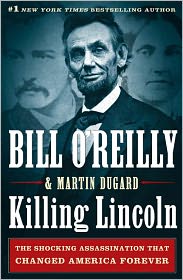
That pompous schmuck Bill O'Reilly and his co-author Martin Dugard are currently being raked over the journalistic coals for substantive errors in their bestselling book, Killing Lincoln: The Shocking Assassination that Changed America Forever.
Civil War experts, including a book reviewer from the official magazine of the Civil War Society, have cited at least ten errors in the book. According to an article on Salon.com, assassination author Edward Steers Jr. cites these errors and more from the book:
  • A farm where John Wilkes Booth hid after the killing was not 500 acres, as the book noted, but 217 acres.
  • The book refers to John Ford's chief carpenter as John J. Clifford. In fact, his name was Gifford.
  • Lewis Powell, the man assigned to kill secretary of state William Seward, did not speak with "an Alabama drawl," as the book notes. Powell was from Florida.

These errors to the nonhistorian might seem petty, but suppose there were similar errors in a healthcare textbook? As a healthcare expert, what would you say?

You'd probably say the same thing that Mr. Steers said about O'Reilly's book: "If all of the above sounds like nitpicking, consider this. If the authors made mistakes in names, places, and events, what else did they get wrong? How can the reader rely on anything that appears in Killing Lincoln?"

The answer is complicated.

Every book has errors


Consider this: There are errors in every book published. Every, single one.

Don't take my word for it. Ask yourself, when was the last time you read a book that didn't have at least one misspelling or punctuation error, or an odd line break where there shouldn't be one, or any other error, factual or otherwise?

I'm guessing that you've never seen such a book, and neither have I.

The same is true for textbooks. Every acquisitions editor at every healthcare publisher has published books with errors in them. From the wonderful Rhonda Dearborn at Delmar, to the fabulous Joan Gill at Pearson, to the marvelous Katey Bircher at Jones & Bartlett, we have all published books with errors.

And we all absolutely and unequivocally hate it.

Our authors hate it even more. They work so very hard to create the very best possible book, and then, after the book publishes, they find this error or that and ask, "How did that happen?"

Here's how


That Pompous Schmuck's book aside, errors can creep into a book in nearly innumerable ways, from poor copyediting to a poor author, from reviewing the same content over and over again to not looking at it enough, from technical glitches to printer error.

We publishers put into place as many safeguards as we can to prevent errors from reaching the reader, and they work nearly all the time. But then, sometimes, for inexplicable reasons, one particular book will be beset with problems and will inevitably hit the shelves with more than the usual number of errors.

I suspect that's partly what happened to That Pompous Schmuck's book. I suspect — and that's all it is, a suspicion — that part of the reason there are so many factual errors was that the fact-checking team at the publishing house (Henry Holt, a division of MacMillan) fell a bit short of its goal. It happens.

Mostly, though, I think the errors, at least the ones I've seen, were the result of the author's lack of competent research, and that's a whole 'nuther ball game. The publisher can try as it might, but it can't overcome a bad author.

So in this case, let's blame — say it with me, now — That Pompous Schmuck!

Sunday, November 6, 2011

Is Your Bloom's Taxonomy Outdated?

Health care educators have been using Bloom’s taxonomy for decades to build goals and objectives. The original levels cited by Bloom inlcude — come on, recite them with me now — knowledge, comprehension, application, analysis, synthesis, and evaluation.

The trouble is, I keep hearing bright, competent, high-level educators still using those terms.

Ruh-roh.

Yep, that’s right, the taxonomy being cited over and over again, on lesson plans and course syllabi, at faculty meetings and educational conferences — including one I just returned from — are woefully outdated.

Here, then, is a reasonably quick update on the “new” changes to Bloom’s original taxonomy.

Basic changes

Anderson and Krathwohl led an interdisciplinary team of experts in cognitive psychology, educational testing, and curriculum and instruction. The team worked to bring to Bloom’s innovative framework greater relevance to modern education.

The most obvious but perhaps least important changes that came out of that effort occurred in the language used for the levels of learning. The diagram below compares the levels in the original and revised versions.

Click to enlarge.


The revision team decided on using verbs instead of nouns to label the levels. It also did a bit of rearranging of levels to make the hierarchy more conceptually consistent.

The real changes, though, go much deeper than swapping nouns for gerunds.

Core change

The revised taxonomy restructures Bloom’s straightforward but one-dimensional language into a more complex, multi-layered one. The new taxonomy incorporates — intersects, if you will — different types of knowledge at each level of learning. Those types of knowledge include factual, conceptual, procedural, and metacognitive (below).

Now, it’s beyond the scope of this post, not to mention my own rather limited knowledge in this area, to delve into every level and type of knowledge. I will, however, point you to some outstanding resources (listed at the bottom) that show far better than I could how much more robust and useful the revised taxonomy is than the original.

Here’s hoping that this info will help you revise your own syllabi and lesson plans to include the brandy-spanking new, nearly 12-year-old taxonomy from our dear, departed friend, Dr. Benjamin Samuel Bloom (1913–1999).

Resources


Lists of verbs for the revised taxonomy