Tuesday, November 15, 2011

F.A. Davis Changing Its Name to FAD.co

Executives at the world-famous healthcare publishing company F.A. Davis announced today that the company's name will henceforth be known as FAD.co.

Fad, indeed.

I'm being fascetious, of course, F.A. Davis is not changing its name. Executives here are much too intelligent to do something so dumb. Unlike the poor folks at Overstock.com, who changed the company's name this past June to "O.co," and who have just decided to change it back to Overstock.com.

They haven't been the first. Other companies have tried to rebrand themselves, including Netflix, Hewlett-Packard, GMAC, the Gap, and Bank of America, and have failed miserably. Add Overstock to that pathetic list.

Stick with what works


In publishing, we take great effort to brand our books in the most effective way possible. Not all books get branded, of course, but many do.

Consider Taber's Cyclopedic Medical Dictionary, our bestselling medical dictionary. I cannot imagine under any circumstances the company changing its name to, oh, I don't know, TCMD. Or, worse, T.

Here are other "book brands" currently under the F.A. Davis roof:

We would change the titles of these brands at great peril, I believe.

The lesson for you


The lesson for you, dear reader, is this: When a publisher has made a commitment to a series or suite of books, you can expect that particular set of products to stick around for quite some time.

You can further expect that most or all of the books in that set are successful, which should increase your trust in the brand overall. If you like one, chances are excellent that you'll like the others too.

And you can take that advice to O.co. Er, I mean, the bank.

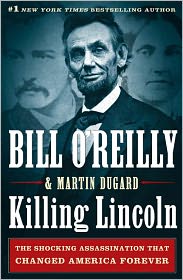
'Killing Lincoln' and How Errors Can Sneak Into a Textbook


That pompous schmuck Bill O'Reilly and his co-author Martin Dugard are currently being raked over the journalistic coals for substantive errors in their bestselling book, Killing Lincoln: The Shocking Assassination that Changed America Forever.
Civil War experts, including a book reviewer from the official magazine of the Civil War Society, have cited at least ten errors in the book. According to an article on Salon.com, assassination author Edward Steers Jr. cites these errors and more from the book:
  • A farm where John Wilkes Booth hid after the killing was not 500 acres, as the book noted, but 217 acres.
  • The book refers to John Ford's chief carpenter as John J. Clifford. In fact, his name was Gifford.
  • Lewis Powell, the man assigned to kill secretary of state William Seward, did not speak with "an Alabama drawl," as the book notes. Powell was from Florida.

These errors to the nonhistorian might seem petty, but suppose there were similar errors in a healthcare textbook? As a healthcare expert, what would you say?

You'd probably say the same thing that Mr. Steers said about O'Reilly's book: "If all of the above sounds like nitpicking, consider this. If the authors made mistakes in names, places, and events, what else did they get wrong? How can the reader rely on anything that appears in Killing Lincoln?"

The answer is complicated.

Every book has errors


Consider this: There are errors in every book published. Every, single one.

Don't take my word for it. Ask yourself, when was the last time you read a book that didn't have at least one misspelling or punctuation error, or an odd line break where there shouldn't be one, or any other error, factual or otherwise?

I'm guessing that you've never seen such a book, and neither have I.

The same is true for textbooks. Every acquisitions editor at every healthcare publisher has published books with errors in them. From the wonderful Rhonda Dearborn at Delmar, to the fabulous Joan Gill at Pearson, to the marvelous Katey Bircher at Jones & Bartlett, we have all published books with errors.

And we all absolutely and unequivocally hate it.

Our authors hate it even more. They work so very hard to create the very best possible book, and then, after the book publishes, they find this error or that and ask, "How did that happen?"

Here's how


That Pompous Schmuck's book aside, errors can creep into a book in nearly innumerable ways, from poor copyediting to a poor author, from reviewing the same content over and over again to not looking at it enough, from technical glitches to printer error.

We publishers put into place as many safeguards as we can to prevent errors from reaching the reader, and they work nearly all the time. But then, sometimes, for inexplicable reasons, one particular book will be beset with problems and will inevitably hit the shelves with more than the usual number of errors.

I suspect that's partly what happened to That Pompous Schmuck's book. I suspect — and that's all it is, a suspicion — that part of the reason there are so many factual errors was that the fact-checking team at the publishing house (Henry Holt, a division of MacMillan) fell a bit short of its goal. It happens.

Mostly, though, I think the errors, at least the ones I've seen, were the result of the author's lack of competent research, and that's a whole 'nuther ball game. The publisher can try as it might, but it can't overcome a bad author.

So in this case, let's blame — say it with me, now — That Pompous Schmuck!

Sunday, November 6, 2011

Is Your Bloom's Taxonomy Outdated?

Health care educators have been using Bloom’s taxonomy for decades to build goals and objectives. The original levels cited by Bloom inlcude — come on, recite them with me now — knowledge, comprehension, application, analysis, synthesis, and evaluation.

The trouble is, I keep hearing bright, competent, high-level educators still using those terms.

Ruh-roh.

Yep, that’s right, the taxonomy being cited over and over again, on lesson plans and course syllabi, at faculty meetings and educational conferences — including one I just returned from — are woefully outdated.

Here, then, is a reasonably quick update on the “new” changes to Bloom’s original taxonomy.

Basic changes

Anderson and Krathwohl led an interdisciplinary team of experts in cognitive psychology, educational testing, and curriculum and instruction. The team worked to bring to Bloom’s innovative framework greater relevance to modern education.

The most obvious but perhaps least important changes that came out of that effort occurred in the language used for the levels of learning. The diagram below compares the levels in the original and revised versions.

Click to enlarge.


The revision team decided on using verbs instead of nouns to label the levels. It also did a bit of rearranging of levels to make the hierarchy more conceptually consistent.

The real changes, though, go much deeper than swapping nouns for gerunds.

Core change

The revised taxonomy restructures Bloom’s straightforward but one-dimensional language into a more complex, multi-layered one. The new taxonomy incorporates — intersects, if you will — different types of knowledge at each level of learning. Those types of knowledge include factual, conceptual, procedural, and metacognitive (below).

Now, it’s beyond the scope of this post, not to mention my own rather limited knowledge in this area, to delve into every level and type of knowledge. I will, however, point you to some outstanding resources (listed at the bottom) that show far better than I could how much more robust and useful the revised taxonomy is than the original.

Here’s hoping that this info will help you revise your own syllabi and lesson plans to include the brandy-spanking new, nearly 12-year-old taxonomy from our dear, departed friend, Dr. Benjamin Samuel Bloom (1913–1999).

Resources


Lists of verbs for the revised taxonomy


Thursday, October 20, 2011

Why I Write

Why I WriteThe National Writing Project (NWP) is celebrating the National Day on Writing this year  partly through the “Why I Write” project, a laudatory effort to be sure.

They’ve garnered thousands of tweets, tons of essays, and held lots of interviews with famous writers.

As a long-time fellow of the NWP I feel it my duty to put forward a response of my own. Here ya go.

I write in my work. I write to teach. I write to communicate. I write to think. I write to feel. I write, sometimes, I think, to avoid talking. Mostly I write because, hey, that’s what I do.

Those short sentences are cop-outs, and you deserve more.

I write most often to communicate.


I probably write more words in e-mails each year than I do in prose pieces, and I suspect many others are in the same boat. E-mails communicate, pure and simple.

At its essence, all writing is communicative, even if that communication is just for yourself. But what I’m talking about here is simple communication from one person to one or more others. It’s the “What do you think?” “Here’s what I think,” and “Let’s do this or that” kind of communication.

Boring.

Less often I write to explain, to teach, to clarify.

Over the years I’ve written many hundreds of individual pieces—books, articles, blogs, white papers, brochures, pamphlets, all kinds of stuff. All of them, as near as I can remember, were aimed at educating readers.

One in particular, though, did more than that. It was my first published article, “Let the Family In,” published in Nursing ’83.That article was educational, yes, but it was also cathartic.

Sometimes I don't write, it writes itself.

Cathartic writing doesn’t happen that often, really. It’s an odd experience. I swear that I didn’t write that article at all, that it just came out. Poured out, really, onto an old IBM Selectric typewriter sitting placidly on a tiny college-type desk in a crowded bedroom.

I remember editing here and there, certainly, but the piece just flowed, as Linda Richman would say, “like buttah.”

Does that explain why that piece was the highest scoring piece of its kind for the journal that year, why it became for more than ten years thereafter the sample the journal editors sent to all prospective writers for that type of column? Nope, it does not.

It’s lovely to think about, I’m proud of it, but really, I didn’t do it. Something inside me did.

And that’s the most wonderful kind of writing, it seems to me, the kind that comes out whether you like it or not. I’ve had that experience a few times in my career, but nowhere near enough.

So maybe, just maybe, I write to have another of those deep cleanses, to have a piece stream from my soul like smoke from a fine cigar.

It’s not the same experience as having saved a life, but man, it’s close.

Sunday, October 2, 2011

6 Electronic Whiteboard Activities for Healthcare Educators

Electronic whiteboards are becoming more prevalent in healthcare education, and rightly so. They’re wonderful tools for engaging students and helping them learn the many intricacies of anatomy, physiology, and many other topics in the health curriculum.

Here’s a half-dozen activities you might want to consider when you use a whiteboard with healthcare students.
Activity #1: Demonstrate blood flow through heart

Project on your whiteboard a blank cutaway view of the heart. Then have students use whiteboard markers to trace blood flow along these or other routes:

  • Upper body to lungs

  • Lower body to lungs

  • Right lung to aorta

  • Left lung to aorta

  • Right ventricle to left ventricle

Activity #2: Calculate dosages

Have students use the whiteboard markers to show their calculations for whatever dosage scenario you give them. Here are a few scenarios to get you started.

  • The physician orders 30mg Celexa by mouth. The tablets you have are 20mg each. How many tablets will you administer?

  • The patient has been told to take 50mg of Amitriptyline, but the pharmacy gave her tablets of 25mg each. How many tablets should she take?

  • A pediatric patient needs 50mg of Amoxicillin syrup. The bottle indicates that there are 125mg per 5mL. How much syrup will you administer?

  • Your patient needs 50mg of Solu-Cortef intramuscularly. The drug is available in 100mg/2ml solution. How much will you administer?

Activity #3: Identify parts of a business letter

Project a box the approximate size and shape of an 8½ × 11 paper. Have students draw boxes where each of the following parts of a business letter should be placed.

  • Heading

  • Inside address

  • Salutation

  • Date

  • Body

  • Complimentary close

  • Signature

  • Superscription

Activity #4: Build medical terms

Give students the meaning of a medical term, and then have them build the term on the whiteboard. Here are a few examples.

  • Removal of the larynx (laryng/ectomy)

  • Tumor of the nervous system (neur/oma)

  • Rapid breathing (hyper/pnea)

  • Surgical opening into the tympanum (tympan/otomy)

  • Surgical creation of an opening of the jejunum through the stomach wall (jejun/ostomy)

For more examples, check your medical terminology text, which I hope is Barb Gylys's Medical Terminology Systems, or Simplified, or her newest, Express. Or perhaps Sharon Eagle's Medical Terminology in a Flash! But I digress.


Activity #5: Break down medical terms

Give students a medical term to write on the whiteboard. Then have them break the word down into its component parts. Here are a few terms to get you started. (Answers in parentheses.)

  • Gangliectomy (gangliectomy/ectomy)

  • Intrathecal (intra/thec/al)

  • Laryngoscope (laryng/o/scope)

  • Dermatologist (dermat/o/logist)

  • Osteochondroma (osteo/chondr/oma)

Activity #6: Sequence steps in a procedure

Set up a drag-and-drop activity, if your whiteboard software offers one, and write the steps to a procedure out of order. Then have students put the steps into the correct order. Don’t be afraid to leave out steps. You’ll want the students to be able to place whatever steps are offered into the proper sequence to make sure that they fully understand the concepts involved.

>>> Do you have other activities you’d like to share? Use the Comment box to help other faculty using electronic whiteboards.